[Image]
This experience sits at a critical transition point where a shopper shifts from browsing to committing. Users are trying to complete a purchase without losing progress, confidence, or time. For the business, this moment supports both immediate conversion and the opportunity to form a longer-term relationship through account creation.
We tested REI’s account creation flow embedded within checkout, including the sign-in, guest checkout, and create-account paths. Participants were asked to imagine continuing their purchase, choose where they would click, and describe what they expected to happen next. The test used Intent, Success, and Expectations metrics to reveal how clearly users understood their options, how confidently they could move forward, and whether the experience matched checkout mental models.
This type of testing surfaces breakdowns that don’t show up as outright rejection, but as hesitation at decision points. For designers and product leaders, these signals help explain where momentum slows even when motivation is high. Understanding these moments makes it easier to protect conversion, reduce friction, and make clearer tradeoffs in high-stakes checkout flows—before small pauses turn into lost purchases.
Define Goals for Your Account Creation
An account creation during checkout experience should balance user needs like speed, trust, and control with business goals such as account growth, retention, and data continuity. Shoppers want to finish their purchase without friction or pressure, while businesses want to turn a one-time transaction into a longer-term relationship. The moment matters because hesitation here can either stall momentum or quietly build loyalty.
**Audience:**
This concept was tested with sporty consumers and outdoor enthusiasts in the United States who went through REI’s account creation flow during checkout. Participants were asked to complete a purchase and react to being prompted to create an account as part of that process, sharing how it affected confidence, speed, and willingness to continue.
User Needs
At this point in checkout, users are focused on finishing the purchase, not committing to more than they planned. The experience should support that mindset.
-
The flow should be easy to understand and complete without adding cognitive load (usable).
-
The request to create an account should feel optional and respectful, not forced (empowering).
-
Any benefits of creating an account should be clearly worth the extra step (valuable).
-
Personal and purchase information should feel protected and handled responsibly (secure).
-
The transition from checkout to account creation should make sense without explanation (intuitive).
Together, these needs ensure account creation feels like a helpful extension of checkout—not a barrier to finishing the purchase.
**Business Goals
**From the business perspective, this is a high-intent moment with real long-term potential.
-
Increase Account Adoption – Convert high-intent shoppers into registered customers without hurting conversion.
-
Preserve Checkout Completion – Avoid introducing friction that causes abandonment at the final steps.
-
Build Long-Term Customer Value – Enable repeat purchases, order history, and loyalty benefits through accounts.
-
Strengthen Trust Early – Establish confidence during the first moment users share personal information.
-
Improve Customer Insights – Capture account data that supports personalization and future engagement.
When these goals are balanced well, account creation becomes a natural continuation of checkout—supporting both immediate revenue and long-term relationships without disrupting momentum.
Choose Metrics to Test Your Account Creation
Account creation during checkout is a moment where commitment, clarity, and momentum intersect. We selected a focused design stack of UX metrics by mapping core user needs to observable signals in the checkout flow. The metrics used here were Intent, Success, and Expectations.
Valuable → Intent
At this stage, users are deciding whether it’s worth continuing and what path will best help them complete their purchase. Intent captures whether shoppers feel motivated to move forward or abandon the process. In this context, intent reflects perceived value—whether creating an account feels like a reasonable tradeoff rather than an obstacle.
Findable → Success
Users need to quickly spot the correct action to continue checkout. Success measures whether participants can identify and select the right path without hesitation. This metric captures moments where layout, labeling, or hierarchy make the next step either obvious or confusing.
Intuitive → Expectations
During checkout, people rely heavily on prior experience and mental models. Expectations measures whether the account creation step behaves the way users think it will. This signal helps reveal gaps between what shoppers believe will happen and what the flow actually communicates.
Establish Hunches to Direct Your Testing
Starting with hunches helps teams name uncertainty before data enters the room. These hunches capture assumptions about where users might hesitate, misinterpret, or feel slowed down, and they shape questions that reduce risk before decisions are made.
Example: REI account creation during checkout
<table xmlns="http://www.w3.org/1999/xhtml" style="min-width: 75px;"><colgroup><col style="min-width: 25px;"><col style="min-width: 25px;"><col style="min-width: 25px;"></colgroup><tbody><tr><th colspan="1" rowspan="1"><p>Hunches</p></th><th colspan="1" rowspan="1"><p>Questions</p></th><th colspan="1" rowspan="1"><p>UX Metric</p></th></tr><tr><td colspan="1" rowspan="1"><p>Shoppers may not immediately understand which option allows them to continue checkout, especially when multiple paths are presented at once.</p></td><td colspan="1" rowspan="1"><p>Click where you would continue with your purchase.</p></td><td colspan="1" rowspan="1"><p>Success</p></td></tr><tr><td colspan="1" rowspan="1"><p>Users might assume creating an account will interrupt checkout or add extra steps, creating hesitation at the decision point.</p></td><td colspan="1" rowspan="1"><p>Please describe what you expect to happen after clicking ‘Create an Account.’</p></td><td colspan="1" rowspan="1"><p>Expectations</p></td></tr><tr><td colspan="1" rowspan="1"><p>Some shoppers may view account creation as optional but unclear in purpose, weakening motivation to choose it confidently.</p></td><td colspan="1" rowspan="1"><p>What would you most likely do next?</p></td><td colspan="1" rowspan="1"><p>Intent</p></td></tr><tr><td colspan="1" rowspan="1"><p>The language and structure of the sign-in and account creation options may not match how users typically think about checkout flows.</p></td><td colspan="1" rowspan="1"><p>How well does this page match your expectations?</p></td><td colspan="1" rowspan="1"><p>Expectations</p></td></tr><tr><td colspan="1" rowspan="1"><p>First-time shoppers may struggle more than returning users when deciding between guest checkout and account creation.</p></td><td colspan="1" rowspan="1"><p>Click where you would go if you’ve never been to this site before and you do not want to use guest checkout.</p></td><td colspan="1" rowspan="1"><p>Success</p></td></tr></tbody></table>
Together, these hunches aim to evaluate how well the experience balances understanding, confidence, and forward momentum at a critical checkout decision point.
Turn Hunches into Test Questions
Turning assumptions into concrete questions makes uncertainty measurable. Pairing each UX metric with a specific question type ensures the signals reflect how people actually move, decide, and explain themselves during checkout.
-
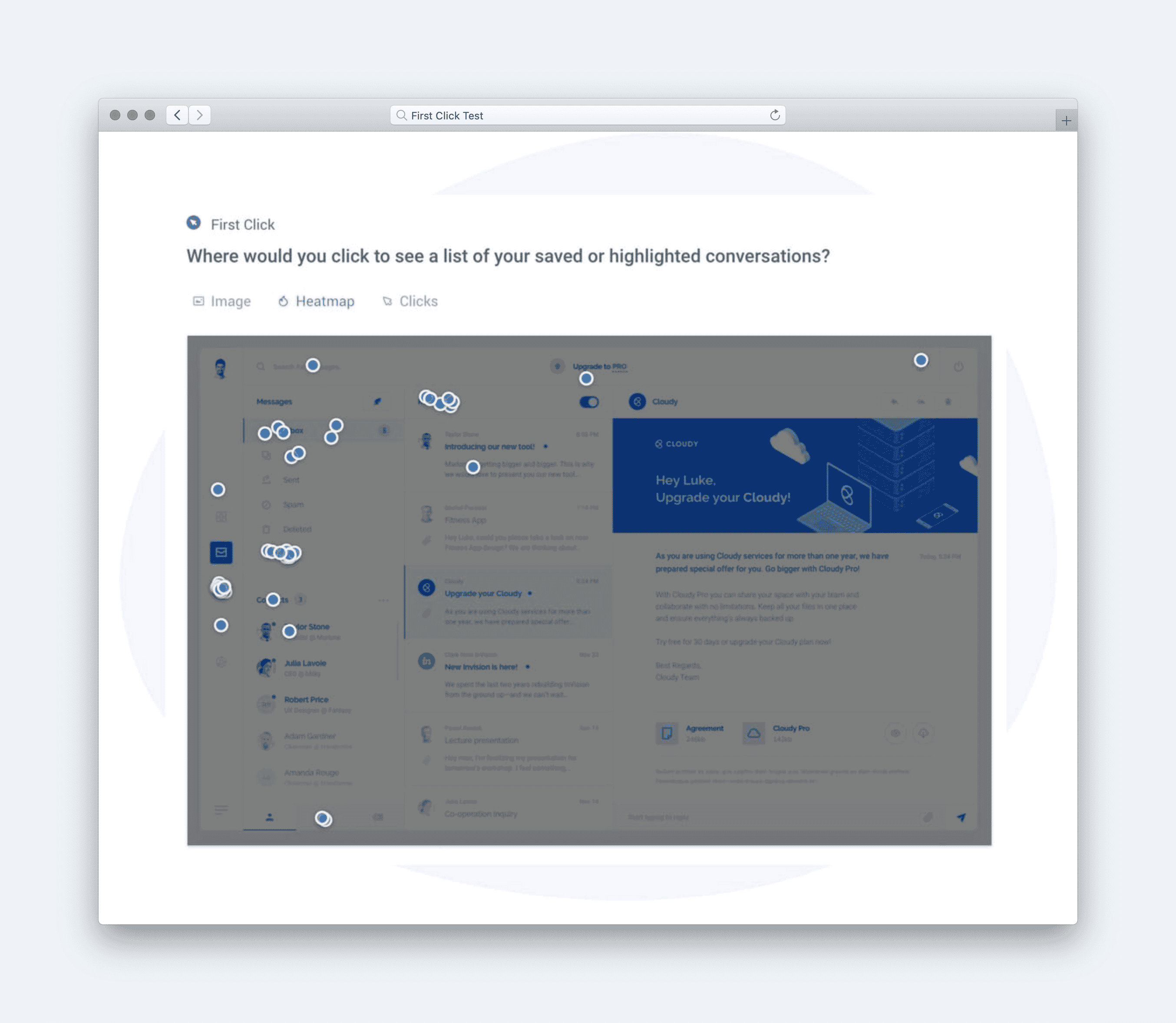
Success (First-click test)
Question type: First-click test Example: “Click where you would go if you’ve never been to this site before and you do not want to use guest checkout.”This variation isolates first-time shopper behavior. It helps distinguish general visibility issues from confusion specific to unfamiliar users.
[Image]
-
Expectations (Likert scale)
Question type: Likert scale
Example: “How well does this page match your expectations?” (Extremely well → Not at all)This question measures alignment between what users expect at this stage and what the interface communicates. Mismatches here often signal hesitation before action.
[Image]
-
Intent (Multiple-choice action)
Question type: Multiple-choice selection
Example: “What would you most likely do next?”This question captures commitment. It shows whether users feel ready to move forward, look for alternatives, or pause at the decision point.
[Image]
Calculate UX Metric Scores from User Feedback
This concept tested account creation during checkout to understand how shoppers decide whether to sign up while trying to complete a purchase. Participants imagined continuing through checkout and reacted to the sign-in, guest checkout, and create-account paths. The design stack included a mix of behavioral and attitudinal UX metrics: Success, Expectations, and Intent.
-
Very Good = 90% and above
-
Good = 70%–89%
-
Average = 50%–69%
-
Poor = 30%–49%
-
Very Poor = below 30%
The overall test score is 72% (Good). This indicates that the checkout experience generally supports forward momentum, but clarity breaks down at specific decision points that require interpretation rather than action.
**Success (44% — Poor):**
Many participants struggled to identify the correct place to click to continue checkout. The low score reflects hesitation and misclicks at the moment users must choose between guest checkout and account creation. This suggests the next step is not immediately obvious, even though users want to proceed.
**Expectations (83% — Good):**
Most participants had a clear sense of what would happen after creating an account. Their explanations aligned with common checkout mental models, signaling that the idea of account creation itself is not surprising. Confusion came more from how the choice was presented than from what it meant.
**Intent (90% — Very Good):** Participants showed strong willingness to continue with their purchase. Many were open to creating an account if it helped them move forward. This score signals high motivation and low resistance to commitment at this stage.
[Image]
Taken together, the scores reveal an experience with strong motivation but uneven clarity. Shoppers are ready to act and generally understand the role of account creation, yet struggle at the exact moment where they need to choose a path. The tension is not about desire—it’s about decisiveness.
Click here to check out the raw survey data and UX metric scores for REI’s account creation flow.
Draw Signals from Your Design Stack
1. Focus on poorly scoring metrics
[Image]
REI’s account creation during checkout flow earned an overall score of 72% (Good), with Intent (90%) standing out as a clear strength and Expectations (83%) performing solidly. The weakest signal came from Success (44%), indicating that while users are highly willing to engage with account creation at this point, many struggle to complete it smoothly. The key signal: motivation is high, but execution breaks momentum at a critical moment.
2. Use design intuition to identify patterns across metrics
[Image]
The contrast between very high Intent and poor Success suggests a friction gap rather than a value gap. Users are open to creating an account and understand why it might be beneficial, but something in the flow—form complexity, sequencing, or perceived interruption—slows them down or causes hesitation. This points to a mismatch between user readiness and the effort required in the moment.
3. Determine if user needs are being met
[Image]
-
Usable: Partially met — the flow is understandable, but completion issues suggest friction in execution.
-
Empowering: Exceeded — users feel the choice to create an account is optional, not forced.
-
Valuable: Met — benefits of account creation are clear enough to drive strong intent.
-
Secure: Met — users feel comfortable sharing personal information at this stage.
-
Intuitive: Partially met — the transition from checkout to account creation isn’t always seamless.
4. Compare outcomes to your business goals
-
Increase Account Adoption: Supported — high intent shows strong potential to convert.
-
Preserve Checkout Completion: At risk — low success suggests friction that could cause drop-off.
-
Build Long-Term Customer Value: Supported — users see value in accounts at purchase time.
-
Strengthen Trust Early: Achieved — confidence remains high despite added steps.
-
Improve Customer Insights: Partially achieved — incomplete flows limit data capture.
5. Surface signals & establish a direction
Signals derived from the data:
-
Users are willing to create an account if it feels like a natural extension of checkout.
-
Friction, not resistance, is the main barrier to completion.
-
High intent amplifies the cost of even small usability issues at this stage.
**Direction based on business context:**
To convert motivation into completion without harming checkout momentum, next steps should focus on:
-
Reducing perceived effort during account creation (fewer fields, clearer progress cues).
-
Tightening the transition so account creation feels integrated, not interruptive.
-
Testing how and when benefits are reinforced relative to required inputs.
[Image]
The signal is clear: shoppers are ready to commit but the experience must respect their urgency to finish the purchase.