Intent measures whether users plan to take a specific action, like signing up, purchasing, or coming back to use the product again. It captures motivation, interest, and the perceived value of what you’re offering.Use this metric during early concept testing, prototype validation, or pre-launch studies where behavior hasn’t happened yet but interest can still be measured. It helps estimate conversion potential and compare which features or messages generate stronger excitement.Intent gives you a forward-looking signal. It helps you understand if your design or offer is inspiring action before anything has even launched.Interpreting the ResultsUse this key to understand what your Intent score means and how to interpret that for your product experience:How to Calculate IntentThe Intent metric measures how likely users are to take action on your page, based on their first-choice click or selection from a set of defined options.Set up questionsUse a multiple choice question to ask participants what would be their most likely next action on a page:List a range of plausible user actions, including both primary and secondary calls-to-action. Place this question in a concept test or homepage evaluation and distribute it to your target audience using a remote research platform.Collect dataThe multiple choice question will produce a data set that looks something like this:The single-select option on the question provides a stronger signal about how most participants intend to act next.Plug data into the formulaThe Intent score is calculated using the following formula:The highest percentage action is weighted most heavily (×3), followed by the second (×2), and third (×1). The result is divided by the maximum possible score of 300% to produce a final percentage.Calculate the Intent scoreA score of 61% is considered Average on a scale from Very Poor to Very Good, suggesting that while some users are motivated to act, others may be unsure or uninterested in the available options.When to Use Intent MetricsIntent metrics are ideal for evaluating how likely users are to take an action and identifying opportunities to optimize flows, messaging, or design elements. These metrics help teams gauge interest, predict conversion, and uncover barriers that prevent users from moving forward. Here are some common use cases for using intent metrics:Landing PagesEvaluate how well landing pages motivate users to take specific actions, such as signing up or downloading content.Pricing PagesMeasure user intent to purchase or subscribe, and identify messaging or layout issues that cause hesitation.Call-to-Actions (CTAs)Assess whether CTAs are clear, compelling, and encourage users to move forward in their journey.How We Measured Intent on Getup’s E-commerce HomepageTo understand what actions users are most likely to take when landing on Getup’s homepage, we tested how effectively the page drives intent across a range of possible behaviors. From shopping outfits to syncing calendars or watching a style guide video, the homepage featured several interactive paths. Measuring user intent allowed us to see whether the most important conversion opportunities were being prioritized in users' minds.The SetupIntent is measured by showing participants a homepage and asking them to choose what action they’re most likely to take next from a list of potential paths, including:A Primary Action (e.g., “Shop this look”)A Secondary Action (e.g., “Watch guide video”)Tertiary actions or non-engagement responses (e.g., “Leave the site”)A weighted scoring system based on response type produces a single Intent score.The ResultsOur multiple choice question produced the following results:We plugged the data into the Intent formula to reveal the score:The homepage received an Intent score of 61%, rated Average on the Glare scale65% of participants selected “Shop this look,” the page’s primary CTA, as their next step19% chose the guide video, suggesting curiosity toward learning more before acting11% selected the calendar sync option, indicating lower relevance for most usersOnly 5% said they would leave the site, which is a positive sign for retaining visitorsThe ImpactWhile the strong majority of users gravitated toward the shopping CTA, the overall Intent score was held back by the spread of responses across less critical actions. These findings helped the Getup team consider reprioritizing how content is ordered and reducing distractions that dilute attention from the main goal. Small layout or copy changes may help further clarify the primary path forward and boost future Intent scores.SourceHelio SurveyCSVHow to Use AI to Measure IntentUsing the multiple choice question outlined in the How to Calculate section above, gather responses on a survey from an audience of at least 100 respondents. We find that 100 responses is statistically significant in most markets. Once the responses are collected, download the CSV file of your data report and upload it into an AI platform along with the prompt below.Copy this AI prompt to calculate your own Intent score, and check out the type of output it would produce:Technicals for Measuring IntentThe code snippets below show how UX metrics can be measured using data from a survey platform. Take a peak into the development of these metrics, and even become a contributor in ourpublic repo.Data StructureThe JSON structure below tracks user intent by recording the percentage of users who select various choices. There are eight choices in total, which follow the standard sentiment pattern.This data structure allows us to record and track the distribution of user intent based on various options selected in surveys, helping to quantify potential user actions.{\n\t\u0022choices\u0022 : [\n\t\t{\n\t\t\t\u0022text\u0022: 1,\n\t\t\t\u0022percentage\u0022: 23,\n\t\t},\n\t\t{\n\t\t\t\u0022text\u0022: 2,\n\t\t\t\u0022percentage\u0022: 30,\n\t\t},\n\t\t... total of 8 choices following our sentiment pattern IN ORDER\n\t]\t\t\n}Parsing DataThe Ruby code below calculates thenet intent scorebased on user responses. The code segments users intopromoters,neutral, anddetractors, then calculates the overall intent by subtracting the negative responses (detractors and neutral) from the positive ones (promoters).This calculation generates anet intent score, which reflects user likelihood to engage in specific desirable actions. The higher the score, the stronger the user intent for key actions, providing a quantitative measure of user motivation.class UxMetric\n\tdef net_intent_score\n metrics = { promoters: 9..10, neutral: 7..8, detractors: 1..6 }\n count = metrics.each { |k, v| metrics[k] = score_data.count { |e| v === e } }\n @score ||= ((count[:promoters] - (count[:detractors] + count[:neutral])).to_f / score_data.size * 100).round(2)\n end\nendValidationThe following JavaScript code ensures that intent questions are valid by checking if the choices match a predefined set of post-task satisfaction labels. Each question must contain exactly four choices with the correct text.This validation process ensures that the structure of the intent questions aligns with the expected format, thus providing consistent and reliable data for calculating user intent.function isValidDesirabilityQuestion(question) {\n\tlet postTaskSatisfactionQuestions = [\n\t\t\t'Understood very well',\n\t\t\t'Understood most of it',\n\t\t\t'Understood a little',\n\t\t\t'Did not understand'\n\t\t\t]\n\tfor (let i = 0; i \u003c question.choices.length; i++) {\n\t if (question.choices[i].text !== postTaskSatisfactionQuestions[i]) {\n\t\t return false;\n\t }\n\t}\n return true;\n}Score TranslationThis JavaScript function translates theintent scoreinto qualitative categories ofHigh,Average, orLowbased on predefined thresholds.This function enables a quick interpretation of the intent score, providing an easy-to-understand categorization that helps stakeholders grasp how likely users are to take specific actions.Formula for Intent CalculationTheIntentmetric measures how likely users are to take specific actions, such as purchasing, signing up, or recommending a product. The intent score is derived from the difference betweenpositive(promoters) andnegative(detractors + neutral) responses.This formula provides insights into users’ likelihood of engaging in desired actions. Tracking the intent score helps identify areas where the product’s design may need adjustments to better align with user intentions.function translateIntentScore(score) {\n\tif (score \u003e 30) {\n\t\treturn 'High';\n\t} else if (score \u003e= 10 || score \u003c 30) {\n\t\treturn 'Avg';\n\t} else {\n\t\treturn 'Low';\n\t}\n}Templates & Presentation MaterialsCreate effective presentation slides, document design concepts, and implement UX Metrics with templates and resources.We've done the work to provide professional layouts that communicate to your stakeholders. UX Metric cards clearly communicate the totals, allow space for breakdowns, and styled to allow for your own brand.Visit Findings for TemplatesTake This Further with the UX Metrics AI SkillsIntent measures whether users are doing what they came to do in your product. TheUX Metrics AI Skillsis a package you load into your LLM so you can ask questions and get expert answers anytime.Find out if user actions match their actual goalsSpot where your product is pulling users off trackCompare intended vs. actual behavior across flowsUse intent data to align your product with user goalsDrop it into your LLM and start asking questions right away.
Intent
Related links
Phillip Hunter writes about creating a Statement of Design Intent — a short doc that captures what a design is meant to do, and why, before pixels move. Useful when a team is starting a new project and wants a way to align on intent before investing in mockups.
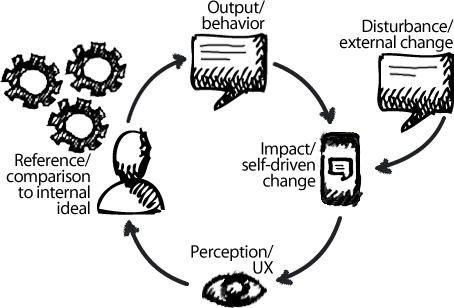
Alexandra O'Neal applies Perceptual Control Theory to UX — using control loops to discover what users are actually controlling when they use a product. Useful when a researcher wants a deeper theoretical lens on intent than 'jobs to be done' offers.
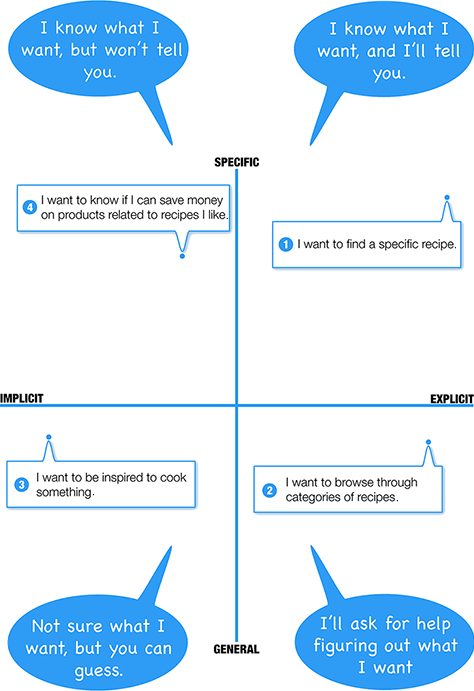
Jordan Julien explains why knowing user intent — what someone is actually trying to do — is the foundation of good UX, and how teams misread it. Useful when a team is designing flows but never asks 'what is the user trying to do here?'
Identify where decision quality breaks down
The Glare Design Assessment helps teams spot weak validation, stakeholder friction, alignment gaps, and assumptions that scale without measurable learning—so you have a clearer starting point for improvement.
About 5 minutes · Team-based · Diagnostic snapshot you can act on
Take the Design Assessment