Glare is a decision framework for product and design teams.
It helps teams make clear choices while the work is still moving.
AI has changed how teams build things. Teams can now make concepts, prototypes and working versions very fast. Work that took weeks now takes minutes.
So teams can now build ideas faster than they can check them. Stakeholders want to see progress sooner. Teams try more ideas than ever, often without enough feedback from users.
That means more ideas, more experiments and more pressure than a team can handle.
Product, design, engineering, research and leaders all want different things. Opinions pile up. Plans change, and choices get opened up again. Teams work hard, but they still are not sure what should move forward.
Glare creates clarity before weak decisions scale.
Glare gives teams one shared way to:
-
Shape product and design decisions
-
Check their direction with users
-
Agree on decisions across teams
-
Get better at making decisions over time
The goal is to help teams move fast and still see clearly.
In our work, teams do not run out of ideas. The hard part is picking which ideas are worth building, and getting everyone to agree.
Too often, teams go back to arguing about opinions. They run A/B tests on their own. They collect feedback in scattered places. They try experiments that never lead anywhere clear.
Working with people has also gotten harder. Teams jump back and forth between:
-
Meetings
-
Slack messages
-
Stakeholder feedback
-
Roadmap talks
-
AI-generated ideas
-
Research findings
-
Questions about how to build it
-
Analytics dashboards
-
Experiments
-
Pressure to ship
Their attention gets split up. People feel busy all day, but they feel less sure about their choices.
Faster output. Harder decisions.
AI makes it easy to make things, so good human judgment matters more. Teams now spend less time making things. They spend more time getting people to agree and weighing tradeoffs. They read signals, stay focused and decide even when they are not sure.
The hard part is staying clear while everything speeds up.
As Ian Batterbee put it:
AI has made it easy to generate work quickly, but much harder to know what to trust.
You can see this pressure in everyday work:
-
Feedback piles up with no clear direction
-
Decisions lean on opinions instead of evidence
-
It gets hard to explain what design changed
-
Teams have trouble agreeing on what users really need
-
Priorities keep moving
-
Confidence drops as speed goes up
Teams face constant feedback, changing priorities and more ideas than they can check. Over time, the pressure grows. More experiments start. More AI ideas show up. More versions get tried. But it gets harder to see what users are really reacting to.
The work rarely slows down. Designers, researchers, product managers and engineers are always on the move. They jump between reviews, feedback, priorities, building questions, AI tools and talks with stakeholders.
The work rarely slows down.
By the end of the day, teams can feel unsure about the choices that shape their product.
That is why signals matter.
Signals make things clear while the work keeps moving. Teams can stop defending opinions and focus on what users are really reacting to.
Jake Johnson described the tension clearly:
We’re moving faster than ever, but it’s harder to explain why we’re making certain decisions. Design still gets questioned because we can’t clearly show its impact when leadership asks.
Glare helps at these moments, before the team loses speed. It turns scattered feedback, UX metrics, questions and user answers into signals. Signals make choices easier to compare, talk about and act on.
What Makes Glare Work
Glare works because it gives teams one shared way to go from unsure to clear.
Most teams already have what they need to start. Questions come up in reviews. New ideas get tried. Feedback, numbers and opinions keep growing as the work moves. Product, design, engineering and research all see things a little differently.
The hard part is turning all of that into one clear direction.
Glare gives those moments a shape. Then choices are easier to compare, talk about, check and act on.
The Decision Map
The Decision Map sorts product decisions into four facets. Each facet answers one question. Each one has four blocks that you move through in order. And each one is judged by one quality that only users can decide.
<table xmlns="http://www.w3.org/1999/xhtml" style="min-width: 100px;"><colgroup><col style="min-width: 25px;"><col style="min-width: 25px;"><col style="min-width: 25px;"><col style="min-width: 25px;"></colgroup><tbody><tr><td colspan="1" rowspan="1"><p><strong>Facet</strong></p></td><td colspan="1" rowspan="1"><p><strong>Question it answers</strong></p></td><td colspan="1" rowspan="1"><p><strong>Blocks, in order</strong></p></td><td colspan="1" rowspan="1"><p><strong>Users gauge</strong></p></td></tr><tr><td colspan="1" rowspan="1"><p><a target="_blank" rel="noopener noreferrer nofollow" href="https://glare.zurb.com/docs/decision-map/define">Define</a></p></td><td colspan="1" rowspan="1"><p>What matters?</p></td><td colspan="1" rowspan="1"><p>User Needs → Audience → Collecting → Situations</p></td><td colspan="1" rowspan="1"><p>Credibility</p></td></tr><tr><td colspan="1" rowspan="1"><p><a target="_blank" rel="noopener noreferrer nofollow" href="https://glare.zurb.com/docs/decision-map/measure">Measure</a></p></td><td colspan="1" rowspan="1"><p>Does it work?</p></td><td colspan="1" rowspan="1"><p>Concepts → Hunches → Testing → Findings</p></td><td colspan="1" rowspan="1"><p>Usefulness</p></td></tr><tr><td colspan="1" rowspan="1"><p><a target="_blank" rel="noopener noreferrer nofollow" href="https://glare.zurb.com/docs/decision-map/focus">Focus</a></p></td><td colspan="1" rowspan="1"><p>What do we do?</p></td><td colspan="1" rowspan="1"><p>Initiatives → Variables → Comparing → Bets</p></td><td colspan="1" rowspan="1"><p>Desirability</p></td></tr><tr><td colspan="1" rowspan="1"><p><a target="_blank" rel="noopener noreferrer nofollow" href="https://glare.zurb.com/docs/decision-map/lead">Lead</a></p></td><td colspan="1" rowspan="1"><p>What does it drive?</p></td><td colspan="1" rowspan="1"><p>Business Goals → Workflows → Mapping → Results</p></td><td colspan="1" rowspan="1"><p>Viability</p></td></tr></tbody></table>
Measure runs one test to get an answer. Focus runs that same test again while one thing changes. Then the team can see which option is stronger and bet on it. Lead follows each bet to the business goals it is meant to help.
The last block in each facet is where the work comes together. Those blocks are Situations, Findings, Bets and Results. Each one is a claim the team can check against what users show.
Where to start
If you do not have a hunch yet, start in Define with Collecting. Learn with an open mind before anyone has an idea to defend. If you already believe something about a concept, start in Measure. Teams move back and forth between the facets as they learn more.
Reusable Components
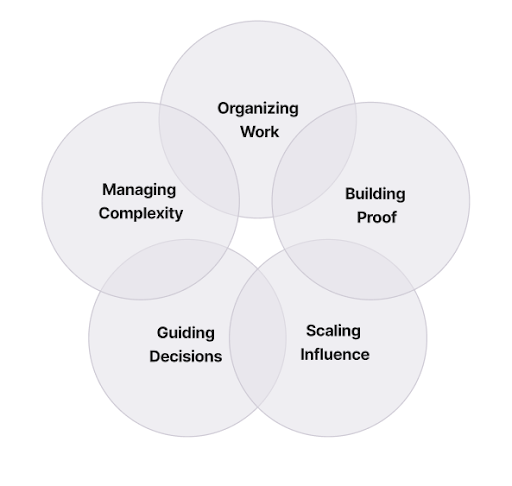
Glare is built from parts that work together. They help teams shape decisions, check their direction, agree across teams and get better over time. UX Metrics, Design Signals and Glarify are used in every block of the Decision Map.
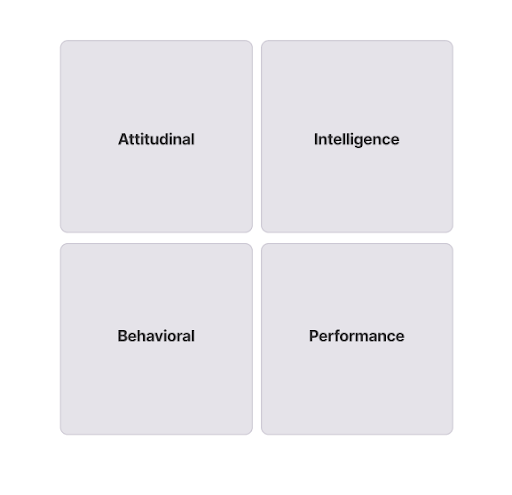
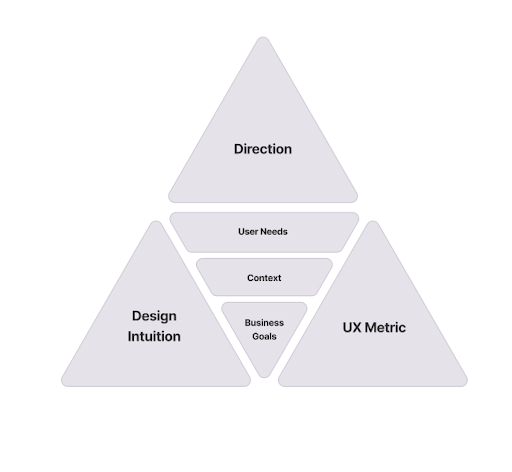
<table xmlns="http://www.w3.org/1999/xhtml" style="min-width: 50px;"><colgroup><col style="min-width: 25px;"><col style="min-width: 25px;"></colgroup><tbody><tr><td colspan="1" rowspan="1"><h3><a target="_blank" rel="noopener noreferrer nofollow" href="https://glare.zurb.com/docs/ux-metrics"><strong>UX Metrics</strong></a></h3><p><strong>Create measurable evidence for decisions.</strong> UX Metrics measure how people experience products, tasks, services and screens.</p><img class="max-w-full h-auto" src="https://glare-wiki.s3.us-east-1.amazonaws.com/uploads/cmblc45uo0000l104p9x3oogl/1778528101639-Intelligence.png"><p></p><p>They help you understand things like:</p><ul><li><p>Usability</p></li><li><p>Trust</p></li><li><p>Comprehension</p></li><li><p>Satisfaction</p></li><li><p>Frustration</p></li></ul><p>Glare turns what users do and say into evidence. People can compare it, talk about it and act on it.</p><p></p></td><td colspan="1" rowspan="1"><p><br></p><p>Teams often use UX Metrics to:</p><ul><li><p>Compare concepts</p></li><li><p>Test onboarding steps</p></li><li><p>Find where people get stuck</p></li><li><p>See how things change over time</p></li><li><p>Help decide what comes first</p></li></ul><p>Opinions and scattered feedback are not enough. With UX Metrics, people can see clear patterns in how users respond.</p><p><br></p></td></tr><tr><td colspan="1" rowspan="1"><h3><a target="_blank" rel="noopener noreferrer nofollow" href="https://glare.zurb.com/docs/design-signal">Design Signals</a></h3><p><strong>Turn measurable evidence into clearer direction.</strong> Design Signals make it easier to see what users are really reacting to.</p><img class="max-w-full h-auto" src="https://glare-wiki.s3.us-east-1.amazonaws.com/uploads/cmblc45uo0000l104p9x3oogl/1777917510527-Direction.png"><p></p><p>Design Signals connect:</p><ul><li><p>A product decision</p></li><li><p>How users respond, in numbers</p></li><li><p>The result that decision should change</p></li></ul><p></p></td><td colspan="1" rowspan="1"><p><br><br>Signals help show:</p><ul><li><p>Where users get stuck</p></li><li><p>What is working well</p></li><li><p>Which direction has stronger evidence</p></li></ul><p>When signals are clear, conversations stay on track and decisions are easier to make. Instead of arguing about opinions, people can talk about the same evidence.</p><p><br><br></p></td></tr><tr><td colspan="1" rowspan="1"><h3><strong>Glarify</strong></h3><p><strong>Share evidence in a form people can act on.</strong> Glarify turns any Glare result into something one reader can use. It shows up in the place they already look. It never makes weak evidence look strong.</p><p></p></td><td colspan="1" rowspan="1"><p>Glarify works through six choices, in order:</p><ul><li><p>Evidence strength</p></li><li><p>Purpose</p></li><li><p>Audience</p></li><li><p>Content shape</p></li><li><p>Presentation approach</p></li><li><p>Destination</p></li></ul><p>A bet goes to a VP as a one-page brief. A comparison goes to the product team as a slide or a Helio report.</p><p></p></td></tr><tr><td colspan="1" rowspan="1"><h3><a target="_blank" rel="noopener noreferrer nofollow" href="https://glare.zurb.com/docs/ai-skills"><strong>AI Skills</strong></a></h3><p><strong>Shape product and design decisions with AI.</strong> AI Skills are steps you can use again and again. They help you judge ideas, concepts, prompts and feedback the same way every time.</p><p><br></p><img class="max-w-full h-auto" src="https://glare-wiki.s3.us-east-1.amazonaws.com/uploads/cmblc45uo0000l104p9x3oogl/1778528121720-Shape.png"><p></p><p>They help turn prompts, concepts and feedback into clearer decisions.</p><p><br><br></p></td><td colspan="1" rowspan="1"><p><br><br>Teams often use AI Skills to:</p><ul><li><p>Frame product questions</p></li><li><p>Compare concepts</p></li><li><p>Set up critiques</p></li><li><p>Read UX Metrics</p></li><li><p>Make sense of findings</p></li><li><p>Decide what comes first</p></li><li><p>See the tradeoffs</p></li></ul><p>AI can make ideas fast, but those ideas still need a clear way to be judged.</p><p><br></p></td></tr><tr><td colspan="1" rowspan="1"><h3><a target="_blank" rel="noopener noreferrer nofollow" href="https://glare.zurb.com/docs/design-review"><strong>Design Review</strong></a></h3><p><strong>Align decisions across teams.</strong> Design Review is where teams use signals in real product talks.</p><img class="max-w-full h-auto" src="https://glare-wiki.s3.us-east-1.amazonaws.com/uploads/cmblc45uo0000l104p9x3oogl/1777928081619-Circ .png"><p></p><p>This is often where work slows down. Feedback grows. Opinions grow. Decisions get harder to finish.</p><p></p></td><td colspan="1" rowspan="1"><p><br><br>Signals make it easier to:</p><ul><li><p>Focus on what matters most</p></li><li><p>Compare concepts more clearly</p></li><li><p>Talk about tradeoffs</p></li><li><p>Stop going in circles</p></li><li><p>Move the talk toward a decision</p></li></ul><p>When reviews use shared signals, people argue less about opinions. They spend more time looking at evidence together.</p><p><br></p></td></tr><tr><td colspan="1" rowspan="1"><h3><strong>Glare MCP</strong></h3><p><strong>Keep the record behind every decision.</strong> The Glare MCP is how people and AI reach what Glare knows. It brings back evidence the team already has, and shows where each piece came from.</p><p>It keeps three linked layers:</p><ul><li><p>Evidence: what we knew, and where it came from</p></li><li><p>Expectations: what we expected, like hunches and named situations</p></li><li><p>Proof: how well each expectation held up once users showed us</p></li></ul><p></p></td><td colspan="1" rowspan="1"><p>Teams often use the Glare MCP to:</p><ul><li><p>Add evidence the team already has to Collecting</p></li><li><p>Give hunches something to test against</p></li><li><p>Compare results from one round to the next</p></li><li><p>Trace a result back to what the team knew and expected</p></li></ul><p>Every item shows where it came from. So a decision can show its reasons without telling them all again.</p><p></p></td></tr><tr><td colspan="1" rowspan="1"><h3><a target="_blank" rel="noopener noreferrer nofollow" href="https://glare.zurb.com/docs/design-assessment"><strong>Design Assessment</strong></a></h3><p><strong>Improve team decision-making over time.</strong> Design Assessment helps a company see how decisions move across the business.</p><img class="max-w-full h-auto" src="https://glare-wiki.s3.us-east-1.amazonaws.com/uploads/cmblc45uo0000l104p9x3oogl/1777928089082-Org Work .png"><p></p><p>Even with strong signals, decisions can still stall. Evidence gets lost. People stop agreeing. Work gets unclear between teams and leaders.</p><p></p></td><td colspan="1" rowspan="1"><p>The assessment helps show:</p><ul><li><p>where signals are strong</p></li><li><p>where decisions break down</p></li><li><p>where work gets unclear</p></li><li><p>where evidence is missing</p></li><li><p>where friction slows things down</p></li></ul><p>This shows where fixes will help the most.</p><p><br><br></p></td></tr></tbody></table>
How Decisions Move Through Glare
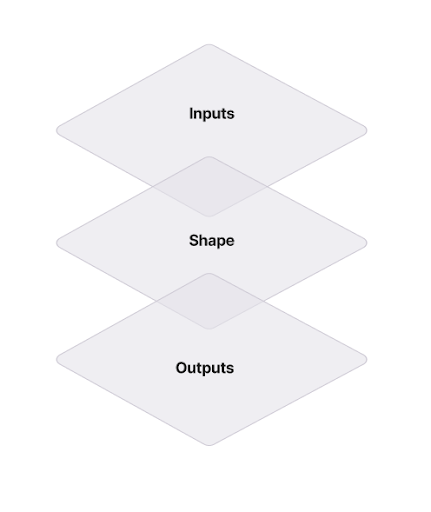
Product decisions rarely start with a clear answer. Most work starts with a mix of things. There are ideas, feedback, numbers and stakeholder worries. People have different opinions about what to do next. The hard part is sorting through all of it to find one clear direction.
Glare gives that mix a shape. Then teams can choose a direction while the work keeps moving.
<table xmlns="http://www.w3.org/1999/xhtml" style="min-width: 75px;"><colgroup><col style="min-width: 25px;"><col style="min-width: 25px;"><col style="min-width: 25px;"></colgroup><tbody><tr><td colspan="1" rowspan="1"><p><strong>Inputs</strong></p><p>Most product work starts with:</p><ul><li><p>Product questions</p></li><li><p>Concepts or flows</p></li><li><p>UX metrics</p></li><li><p>User feedback</p></li><li><p>AI-made versions</p></li><li><p>Stakeholder worries</p></li><li><p>Opinions that clash</p></li><li><p>Evidence the team already has, through the Glare MCP</p></li></ul></td><td colspan="1" rowspan="1"><p><strong>Process</strong></p><p>Glare sorts those inputs through:</p><ul><li><p>Define: what matters, for whom, and in what situation</p></li><li><p>Measure: hunches tested against real evidence</p></li><li><p>Focus: one test repeated while one thing changes, then a bet</p></li><li><p>Lead: bets followed to business goals and results</p></li><li><p>Glarify: each result shared with the reader who needs it</p></li></ul></td><td colspan="1" rowspan="1"><p><strong>Outputs</strong></p><p>Over time, this gives you:</p><ul><li><p>Clearer priorities</p></li><li><p>Teams that agree</p></li><li><p>Evidence that shows how well each decision held up</p></li><li><p>Faster moves from feedback to decisions</p></li><li><p>Less work done twice</p></li><li><p>More confidence in what moves forward</p></li></ul></td></tr></tbody></table>
Example Workflow
A product team is getting ready to launch a new onboarding experience. The team already has a few onboarding concepts and some numbers. It also has AI-made versions and stakeholder worries about sign-ups.
It is easy to see why the team feels stuck. There are too many ideas and too much feedback. No one agrees on which way to go.
Glare is designed to help structure those moments.
Glare walks the team through the four facets of the Decision Map. It goes one block at a time.
Define. User Needs: new users need to get one thing done on their first visit. Audience: people on a free trial and invited teammates are kept in separate groups. Collecting: the team gathers support tickets, numbers on where people drop off, and evidence from the Glare MCP. All of it goes into a Source Map. The map shows that most people leave at step 3. Situations: invited teammates show up in the middle of a task, so they skip setup.
Measure. The concept is a shorter guided setup. The hunch: we think invited teammates skip setup because they already have a task in mind. The team writes the questions that would prove the hunch right or wrong. They test the concept in Helio and make the call. The finding becomes a design signal.
Focus. The initiative is getting new users to their first success. The variable is the version. So three onboarding concepts run with the same metrics, the same test and the same audience. Comparing shows where users slow down. It also shows which concept gets the most people to a first success. The team bets on that concept. They make the bet only as big as the evidence allows. They also say what they gave up.
Lead. The bet comes with its business goal: more active users. It also names the workflows it touches. Product owns the change. Marketing updates the welcome emails. Mapping links task success to active users, and then to people who stay. Results checks whether those numbers moved. Glarify turns the bet into a one-page brief for the leaders.
The result is:
-
An onboarding direction backed by user evidence
-
Clearer tradeoffs between concepts
-
Clearer priorities
-
Less work done twice later
-
More confidence before launch
The team stops having the same arguments again and again. It can move forward with clearer evidence and more agreement.
<table xmlns="http://www.w3.org/1999/xhtml" style="min-width: 75px;"><colgroup><col style="min-width: 25px;"><col style="min-width: 25px;"><col style="min-width: 25px;"></colgroup><tbody><tr><td colspan="1" rowspan="1"><p><strong>The team has:</strong></p><ul><li><p>A few onboarding concepts</p></li><li><p>UX metrics from testing</p></li><li><p>AI-made versions</p></li><li><p>Stakeholder worries about sign-ups and use</p></li></ul></td><td colspan="1" rowspan="1"><p><strong>Using Glare:</strong></p><ul><li><p>Define names the need, the audience and the situation behind the drop-off</p></li><li><p>Measure tests a hunch about one concept and makes the call</p></li><li><p>Focus compares the concepts on the same metrics and places a bet</p></li><li><p>Lead ties the bet to more active users and checks the result</p></li></ul></td><td colspan="1" rowspan="1"><p><strong>The result:</strong></p><ul><li><p>An onboarding direction backed by user evidence</p></li><li><p>Tradeoffs everyone can see</p></li><li><p>Clearer priorities</p></li><li><p>Less work done twice later</p></li><li><p>More confidence before launch</p></li></ul></td></tr></tbody></table>
Where This Works Best
Glare works best when work is moving fast but things keep getting less clear. This often happens when a team is trying many concepts. Priorities keep changing. AI adds more ideas and experiments. Decisions need more proof before they grow.
Glare works best when a team has:
-
A way to reach users or get useful feedback
-
A shared understanding of metrics
-
The habit of using signals when deciding
When a team has these, decisions are easier to judge, explain and act on. When it does not, people stop agreeing. The evidence gets mixed up. The same decisions come back again later.
Who Glare is for
Glare is for teams that want to make better product decisions while work moves fast.
It helps:
-
Product teams weigh priorities and tradeoffs
-
Designers connect decisions to results they can measure
-
Researchers turn findings into evidence that points a direction
-
Engineers build from clearer decisions
-
Leaders set priorities, keep teams together and manage risk
It is most useful when the work has:
-
Lots of speed
-
Lots of stakeholder feedback
-
Unclear priorities
-
AI tools in the workflow
-
Pressure to move fast without making weak choices
Scattered opinions and feedback that does not connect are not enough. With Glare, decisions come from clearer signals and shared evidence. The goal is to keep moving without making worse decisions.
When Decisions Matter Most
Glare is most useful when the team is still deciding which way to go.
This often happens during:
-
Concept reviews
-
Roadmap talks
-
Talks about what comes first
-
Checking a new feature
-
Design critiques
-
Launch decisions
-
Exploring with AI
-
Planning across teams
These moments happen all the time. Small choices can cause big effects later. One choice can change engineering work and the customer experience. It can change how many people use the product, what comes first and business results. Those effects last long after the meeting ends.
When decisions are clear:
-
Teams agree faster
-
Tradeoffs are easier to talk about
-
Feedback is easier to judge
-
Teams keep their speed
When things get unclear, decisions get opened up again. People stop agreeing. Confidence drops as the work moves on. Glare helps teams keep their direction while the work keeps changing.
Built from Work
ZURB built Glare after many years of helping teams. We helped them move faster and make better choices, even with real limits.
Across thousands of our projects and 50,000 hours of testing, we kept seeing the same thing. Teams were skilled and moving fast, but decisions slowed down at key moments. The work kept going. But as more feedback, opinions and details came in, it got harder to keep a clear direction.
The teams that kept making progress were not doing more research. They were not following stricter rules. They were better at turning what users did, what people said and their own instincts into choices. Other people could understand those choices, judge them and act on them.
That pattern became the foundation for Glare.
Over time, we shaped this way of working with many kinds of teams. Startups with tight deadlines. Product teams with big roadmaps. Large companies balancing design, engineering and business goals.
Each team was different, but the problem stayed the same. People needed to see what users were showing. They needed to know what the team should do next.
Glare shows how those teams solved that problem in real work.
The framework comes from:
-
Millions of user answers collected through Helio
-
More than 50,000 hours spent testing decisions
-
Work with startups, growing companies and large companies
-
Patterns we saw again and again in product reviews, priority talks and UX measurement
Glare was shaped by real product work. We made it better by using it again and again. It is built on the habits that helped teams stay clear and keep moving.