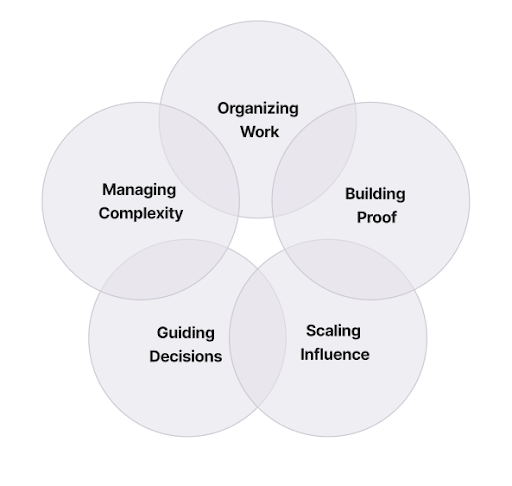
# Getting Started

### Glare is a decision framework for product and design teams.

We built it to help teams make clearer decisions while product work is still moving.

AI has changed how teams build products. Teams can now generate concepts, prototypes, and coded product variations faster than ever before. What used to take days or weeks now happens in minutes. 

Which means engineering teams now prototype and ship ideas faster than most organizations can comfortably evaluate them. Stakeholders expect faster progress. Teams explore more options than ever before, often without enough user feedback to guide decisions clearly. 

The result is more ideas, more experiments, and more pressure than teams can realistically evaluate.  
  
Product, design, engineering, research, and leadership all bring different goals and opinions into the work. Opinions expand. Priorities shift… and decisions reopen. Teams work hard to keep pace while still feeling unsure about what should actually move forward.

#### **Glare creates clarity before weak decisions scale.**

Glare gives teams a shared way to:

-   Shape product and design decisions
    
-   Validate direction with users
    
-   Align decisions across teams
    
-   Improve team decision-making over time
    

The goal is to help teams move faster without losing clarity.

In our work, product and design teams are no longer struggling to generate ideas. The challenge now is figuring out which ideas are actually worth building and aligning teams around them.

Too often, teams fall back on opinion-driven discussions, isolated A/B tests, scattered feedback, or random experiments that never connect back to a clear direction.

At the same time, the human side of product development has become harder to manage. Teams constantly switch between:

-   Meetings
    
-   Slack messages
    
-   Stakeholder feedback
    
-   Roadmap discussions
    
-   AI-generated ideas
    
-   Research findings
    
-   Implementation questions
    
-   Analytics dashboards
    
-   Experiments
    
-   Delivery pressure
    

The result is fragmented attention. People can feel like they are creating a lot of work while confidence in decisions keeps getting weaker.

* * *

## **Faster output. Harder decisions.**

As AI makes production easier, human judgment becomes more valuable. Product and design teams now spend less time creating outputs and more time aligning teams, comparing tradeoffs, interpreting signals, protecting focus, and making decisions under uncertainty.

The challenge is maintaining clarity while everything speeds up.

As [Ian Batterbee](https://www.linkedin.com/in/ianbatterbee/) put it:

> **AI has made it easy to generate work quickly, but much harder to know what to trust.**

That pressure shows up across product work in very practical ways:

-   Feedback accumulates without direction
    
-   Decisions drift toward opinion instead of evidence
    
-   Design impact becomes difficult to explain clearly
    
-   Teams struggle to align on real user needs
    
-   Prioritization becomes unstable
    
-   Confidence weakens as speed increases
    

Teams now deal with constant feedback, shifting priorities, and more ideas than they can realistically evaluate. Over time, the pressure compounds. More experiments enter the system. More AI-generated ideas appear. More product variations get explored. But it becomes harder to clearly understand what users are actually responding to.
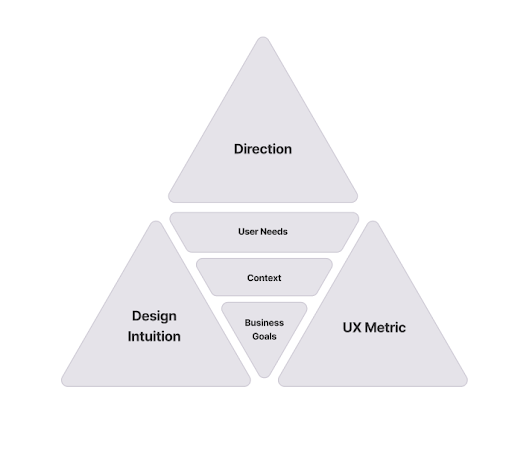
The work rarely slows down. Designers, researchers, product managers, and engineers constantly move between reviews, feedback, prioritization, implementation questions, AI workflows, and stakeholder conversations.

#### **The work rarely slows down.**

By the end of the day, teams can feel unsure about the decisions shaping the product.

That is why signals matter.

Signals create clarity while work is still moving. Instead of defending opinions, teams can focus on understanding what users are actually responding to.

[Jake Johnson](https://www.linkedin.com/in/thejakers/) described the tension clearly:

> **We’re moving faster than ever, but it’s harder to explain why we’re making certain decisions. Design still gets questioned because we can’t clearly show its impact when leadership asks.**

Glare helps structure those moments before momentum is lost. It turns scattered feedback, UX metrics, questions, and user responses into signals that make decisions easier to compare, discuss, and move forward.

### **What Makes Glare Work**

Glare works because it gives teams a shared way to move from uncertainty to clearer decisions.

Most organizations already have the inputs. Questions come up in reviews. New ideas get explored. Feedback, analytics, and opinions keep expanding as work moves forward. Product, design, engineering, and research all bring different perspectives into the process.

The hard part is turning those inputs into a clear direction.

Glare helps teams structure those moments so decisions become easier to compare, discuss, validate, and move forward.

* * *

## **Reusable Components**

Glare is built around six connected components that help teams shape decisions, validate direction, align teams, and improve decision-making over time.

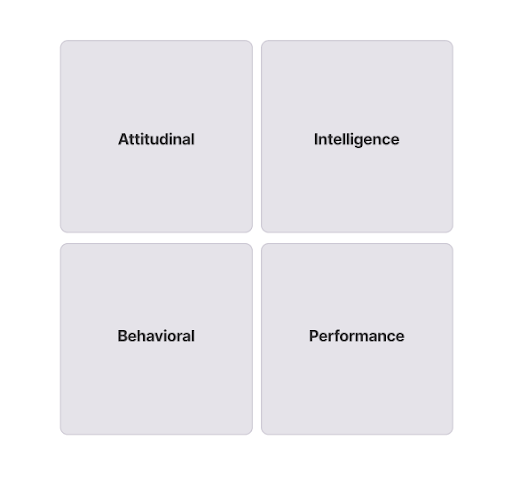
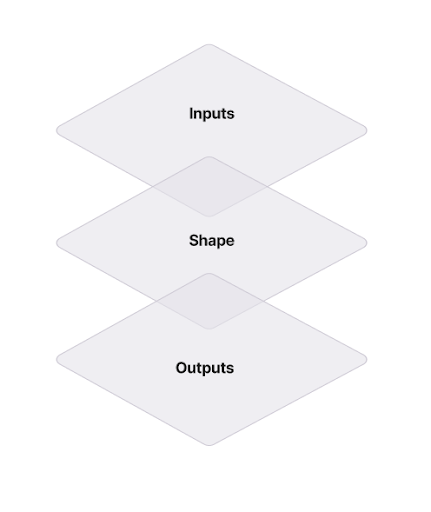
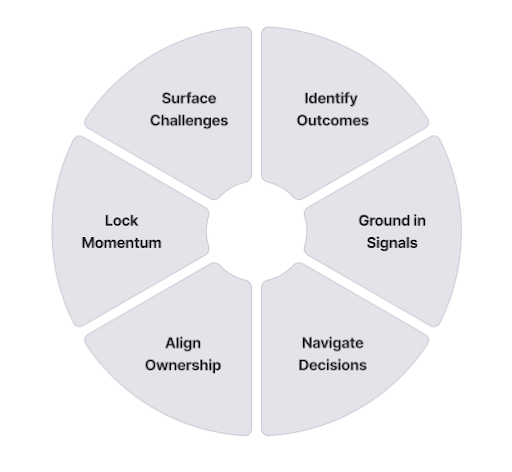
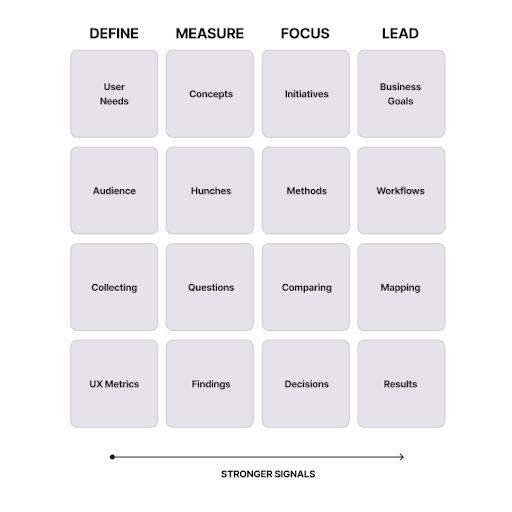
<table xmlns="http://www.w3.org/1999/xhtml" style="min-width: 50px;"><colgroup><col style="min-width: 25px;"><col style="min-width: 25px;"></colgroup><tbody><tr><td colspan="1" rowspan="1"><h3><a target="_blank" rel="noopener noreferrer nofollow" href="https://glare.zurb.com/docs/ux-metrics"><strong>UX Metrics</strong></a></h3><p><strong>Create measurable evidence for decisions. </strong>Measure how people experience products, workflows, services, and interfaces.</p><img class="max-w-full h-auto" src="https://glare-wiki.s3.us-east-1.amazonaws.com/uploads/cmblc45uo0000l104p9x3oogl/1778528101639-Intelligence.png"><p></p><p>They make it easier to understand things like:</p><ul><li><p>Usability</p></li><li><p>Trust</p></li><li><p>Comprehension</p></li><li><p>Satisfaction</p></li><li><p>Frustration</p></li></ul><p>Glare turns user response into measurable evidence people can compare, discuss, and act on.</p><p></p></td><td colspan="1" rowspan="1"><p><br></p><p>UX Metrics are often used to:</p><ul><li><p>Compare concepts</p></li><li><p>Test onboarding flows</p></li><li><p>Identify friction</p></li><li><p>Measure changes over time</p></li><li><p>Support prioritization decisions</p></li></ul><p>Instead of relying only on opinions or scattered feedback, people can look at measurable patterns in how users respond.</p><p><br></p></td></tr><tr><td colspan="1" rowspan="1"><h3><a target="_blank" rel="noopener noreferrer nofollow" href="https://glare.zurb.com/docs/design-signal">Design Signals</a></h3><p><strong>Turn measurable evidence into clearer direction. </strong>Design Signals make it easier to understand what users are actually responding to.</p><img class="max-w-full h-auto" src="https://glare-wiki.s3.us-east-1.amazonaws.com/uploads/cmblc45uo0000l104p9x3oogl/1777917510527-Direction.png"><p></p><p>Design Signals connect:</p><ul><li><p>A product decision</p></li><li><p>Measurable user response</p></li><li><p>The outcome that decision influences</p></li></ul><p></p></td><td colspan="1" rowspan="1"><p><br><br>Signals help reveal:</p><ul><li><p>Where users struggle</p></li><li><p>What is working well</p></li><li><p>Which direction has stronger evidence</p></li></ul><p>When signals are clear, conversations become more focused and decisions become easier to move forward. Instead of debating opinions, conversations can move from shared evidence.</p><p><br><br></p></td></tr><tr><td colspan="1" rowspan="1"><h3><a target="_blank" rel="noopener noreferrer nofollow" href="https://glare.zurb.com/docs/ai-skills"><strong>AI Skills</strong></a></h3><p><strong>Shape product and design decisions with AI. </strong>AI Skills create reusable workflows for evaluating ideas, concepts, prompts, and feedback more consistently.</p><p><br></p><img class="max-w-full h-auto" src="https://glare-wiki.s3.us-east-1.amazonaws.com/uploads/cmblc45uo0000l104p9x3oogl/1778528121720-Shape.png"><p></p><p>They help turn prompts, concepts, and feedback into clearer decisions.</p><p><br><br></p></td><td colspan="1" rowspan="1"><p><br><br>AI Skills are often used to:</p><ul><li><p>Frame product questions</p></li><li><p>Compare concepts</p></li><li><p>Structure critiques</p></li><li><p>Evaluate UX Metrics</p></li><li><p>Interpret findings</p></li><li><p>Guide prioritization</p></li><li><p>Clarify tradeoffs</p></li></ul><p>AI can generate ideas quickly, but those ideas still need a clear way to be evaluated.</p><p><br></p></td></tr><tr><td colspan="1" rowspan="1"><h3><a target="_blank" rel="noopener noreferrer nofollow" href="https://glare.zurb.com/docs/design-review"><strong>Design Review</strong></a></h3><p><strong>Align decisions across teams.</strong> Design Review is where signals get applied inside real product conversations.</p><img class="max-w-full h-auto" src="https://glare-wiki.s3.us-east-1.amazonaws.com/uploads/cmblc45uo0000l104p9x3oogl/1777928081619-Circ%20.png"><p></p><p>This is often where product work slows down. Feedback expands. Opinions grow. Decisions become harder to close.</p><p></p></td><td colspan="1" rowspan="1"><p><br><br>Signals make it easier to:</p><ul><li><p>Focus on what matters most</p></li><li><p>Compare concepts more clearly</p></li><li><p>Discuss tradeoffs</p></li><li><p>Reduce circular feedback</p></li><li><p>Move discussions toward decisions</p></li></ul><p>When reviews use shared signals, conversations spend less time defending opinions and more time evaluating evidence together.</p><p><br></p></td></tr><tr><td colspan="1" rowspan="1"><h3><a target="_blank" rel="noopener noreferrer nofollow" href="https://glare.zurb.com/docs/decision-map"><strong>Decision Map</strong></a></h3><p><strong>Connect decisions to measurable outcomes.</strong> The Decision Map helps teams understand how decisions move through product work.</p><img class="max-w-full h-auto" src="https://glare-wiki.s3.us-east-1.amazonaws.com/uploads/cmblc45uo0000l104p9x3oogl/1777917531815-Stronger%20Signals.png"><p><br></p><p></p><p>It helps teams see:</p><ul><li><p>Where a decision currently sits</p></li><li><p>What information is missing</p></li><li><p>What should happen next</p></li><li><p>How decisions connect to outcomes</p></li></ul><p></p></td><td colspan="1" rowspan="1"><p>The system is organized into four connected areas:</p><ul><li><p><a target="_blank" rel="noopener noreferrer nofollow" href="https://glare.zurb.com/docs/decision-map/define">Define</a></p></li><li><p><a target="_blank" rel="noopener noreferrer nofollow" href="https://glare.zurb.com/docs/decision-map/measure">Measure</a></p></li><li><p><a target="_blank" rel="noopener noreferrer nofollow" href="https://glare.zurb.com/docs/decision-map/focus">Focus</a></p></li><li><p><a target="_blank" rel="noopener noreferrer nofollow" href="https://glare.zurb.com/docs/decision-map/lead">Lead</a></p></li></ul><p>Teams often move back and forth between these areas as new information appears. The map creates a shared way to understand how decisions grow stronger over time.</p><p><br></p></td></tr><tr><td colspan="1" rowspan="1"><h3><a target="_blank" rel="noopener noreferrer nofollow" href="https://glare.zurb.com/docs/design-assessment"><strong>Design Assessment</strong></a></h3><p><strong>Improve team decision-making over time. </strong>Design Assessment helps organizations understand how decisions move across the business.</p><img class="max-w-full h-auto" src="https://glare-wiki.s3.us-east-1.amazonaws.com/uploads/cmblc45uo0000l104p9x3oogl/1777928089082-Org%20Work%20.png"><p></p><p>Even when teams create strong signals, decisions can still lose momentum. Evidence gets lost. Alignment weakens. Workflows become unclear between teams and leadership.</p><p></p></td><td colspan="1" rowspan="1"><p>The assessment helps reveal:</p><ul><li><p>where signals are strong</p></li><li><p>where decisions break down</p></li><li><p>where workflows lose clarity</p></li><li><p>where evidence is missing</p></li><li><p>where friction slows momentum</p></li></ul><p>This creates a clearer picture of where improvements will have the biggest impact.</p><p><br><br></p></td></tr></tbody></table>

* * *

### **How Decisions Move Through Glare**

Product decisions rarely start with a clear answer. Most product work starts with a mix of ideas, feedback, analytics, stakeholder concerns, and different opinions about what should happen next. The hard part is figuring out how to evaluate all of that in a way that creates a clearer direction.

Glare helps structure those inputs so teams can evaluate direction while work is still moving.  

<table xmlns="http://www.w3.org/1999/xhtml" style="min-width: 75px;"><colgroup><col style="min-width: 25px;"><col style="min-width: 25px;"><col style="min-width: 25px;"></colgroup><tbody><tr><td colspan="1" rowspan="1"><p><strong>Inputs</strong></p><p>Most product work starts with:</p><ul><li><p>Product questions</p></li><li><p>Concepts or flows</p></li><li><p>UX metrics</p></li><li><p>User feedback</p></li><li><p>AI-generated variations</p></li><li><p>Stakeholder concerns</p></li><li><p>Competing opinions</p></li></ul></td><td colspan="1" rowspan="1"><p><strong>Process</strong></p><p>Glare organizes those inputs through:</p><ul><li><p>AI Skills that shape evaluations</p></li><li><p>Design Signals that capture user response</p></li><li><p>Design Reviews that compare tradeoffs</p></li><li><p>Decision Maps that connect decisions to outcomes</p></li><li><p>Assessments that reveal friction and gaps</p></li></ul></td><td colspan="1" rowspan="1"><p><strong>Outputs</strong></p><p>Over time, this creates:</p><ul><li><p>Clearer prioritization</p></li><li><p>Stronger alignment</p></li><li><p>Measurable validation</p></li><li><p>Faster movement from feedback to decisions</p></li><li><p>Reduced rework</p></li><li><p>Stronger confidence in what moves forward</p></li></ul></td></tr></tbody></table>

* * *

## **Example Workflow**

A product team is preparing to launch a new onboarding experience. The team already has multiple onboarding concepts, some analytics feedback, AI-generated variations, and stakeholder concerns around conversion and adoption.

It’s easy to see why teams can feel stuck. There are too many ideas, too much feedback, and no clear agreement on which direction should move forward.

#### **Glare is designed to help structure those moments.**

AI Skills help teams organize evaluation criteria and clarify what should actually be measured. Design Signals reveal where users hesitate, where they succeed, and which onboarding direction creates the strongest response.

During Design Reviews, concepts are compared against measurable user feedback instead of relying only on opinions or assumptions. The Decision Map connects the strongest onboarding direction back to adoption and conversion goals.

The result is:

-   A validated onboarding direction
    
-   Clearer tradeoffs between concepts
    
-   Stronger prioritization
    
-   Less downstream rework
    
-   More confidence before launch
    

Instead of reopening the same debates repeatedly, decisions can move forward with clearer evidence and stronger alignment.

<table xmlns="http://www.w3.org/1999/xhtml" style="min-width: 75px;"><colgroup><col style="min-width: 25px;"><col style="min-width: 25px;"><col style="min-width: 25px;"></colgroup><tbody><tr><td colspan="1" rowspan="1"><p><strong>The team has:</strong></p><ul><li><p>Multiple onboarding concepts</p></li><li><p>UX metrics from testing</p></li><li><p>AI-generated variations</p></li><li><p>Stakeholder concerns around conversion and adoption</p></li></ul></td><td colspan="1" rowspan="1"><p><strong>Using Glare:</strong></p><ul><li><p>AI Skills structure the evaluation criteria</p></li><li><p>Design Signals reveal where users hesitate or succeed</p></li><li><p>Design Review compares concepts against measurable responses</p></li><li><p>the Decision Map connects the strongest direction to onboarding goals</p></li></ul></td><td colspan="1" rowspan="1"><p><strong>The result:</strong></p><ul><li><p>A validated onboarding direction</p></li><li><p>Visible tradeoffs between concepts</p></li><li><p>Clearer prioritization</p></li><li><p>Reduced downstream rework</p></li><li><p>Stronger confidence before launch</p></li></ul></td></tr></tbody></table>

### **Where This Works Best**

Glare works best when product work is moving quickly but clarity keeps getting weaker. This usually happens when multiple concepts are being explored, priorities keep shifting, AI increases the number of ideas and experiments, and decisions need stronger validation before scaling.

Glare works best when there is:

-   Access to users or meaningful feedback
    
-   A shared understanding of metrics
    
-   Consistent use of signals during decisions
    

When those conditions exist, decisions become easier to evaluate, explain, and move forward with confidence.  When they are missing, alignment weakens, evidence becomes inconsistent, and the same decisions often reopen later.

* * *

## **Who Glare is for**

Glare is built for teams trying to make better product decisions while work is moving quickly.

It supports:

-   Product teams evaluating priorities and tradeoffs
    
-   Designers connecting decisions to measurable outcomes
    
-   Researchers turning findings into directional evidence
    
-   Engineers working against clearer decision inputs
    
-   Leadership teams managing prioritization, alignment, and risk
    

It is especially useful when product work involves:

-   Fast-moving product work
    
-   Lots of stakeholder feedback
    
-   Unclear priorities
    
-   AI-assisted workflows
    
-   Pressure to move quickly without making weak decisions
    

Instead of relying on scattered opinions or disconnected feedback, decisions can move from clearer signals and shared evidence. The goal is to maintain momentum without weakening decision quality.

## **When Decisions Matter Most**

Glare is most useful during the moments where product direction is still being decided.

This often happens during:

-   Concept reviews
    
-   Roadmap discussions
    
-   Prioritization conversations
    
-   Feature validation
    
-   Design critiques
    
-   Launch decisions
    
-   AI-assisted exploration
    
-   Cross-functional planning
    

These moments happen constantly across product work, and small decisions can create large downstream effects. A single choice can influence engineering effort, customer experience, adoption, prioritization, and business outcomes long after the meeting ends.

When decisions are clear:

-   Teams align faster
    
-   Tradeoffs become easier to discuss
    
-   Feedback becomes easier to evaluate
    
-   Momentum carries forward across teams
    

When clarity weakens, decisions reopen, alignment falls apart, and confidence drops as work moves downstream. Glare helps teams maintain direction while product work is still evolving.

* * *

## **Built from Work**

Glare was built by ZURB after decades of helping teams move faster and make better decisions under real constraints.

Across thousands of our projects **and 50,000 hours of testing**, the same pattern kept showing up. Teams were capable, experienced, and moving quickly, but decisions would slow down at key moments. Work continued, yet direction became harder to maintain as more feedback, opinions, and complexity entered the system.

The teams that made consistent progress were not doing more research or following stricter processes. They were better at turning user response, feedback, and intuition into decisions other people could understand, evaluate, and act on.

### **That pattern became the foundation for Glare.**

Over time, this approach was shaped through repeated use across different types of teams and environments. Startups working under tight timelines. Product teams managing complex roadmaps. Organizations balancing design, engineering, and business priorities at scale.

The context changed from team to team, but the underlying challenge stayed consistent: helping people understand what users are showing and what the team should do next.

Glare reflects how those teams solved that problem in practice.

The framework draws from:

-   Millions of user responses collected through Helio
    
-   Tens of thousands of hours spent testing decisions
    
-   Work across startups, scaleups, and enterprise organizations
    
-   Repeated patterns observed in product reviews, prioritization discussions, and UX measurement workflows
    

Glare was shaped through real product work, refined through repeated use, and built around the systems that consistently helped teams create clarity and maintain momentum.