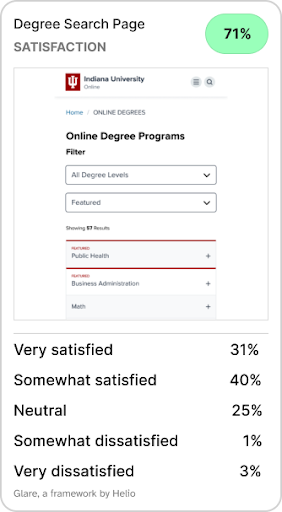
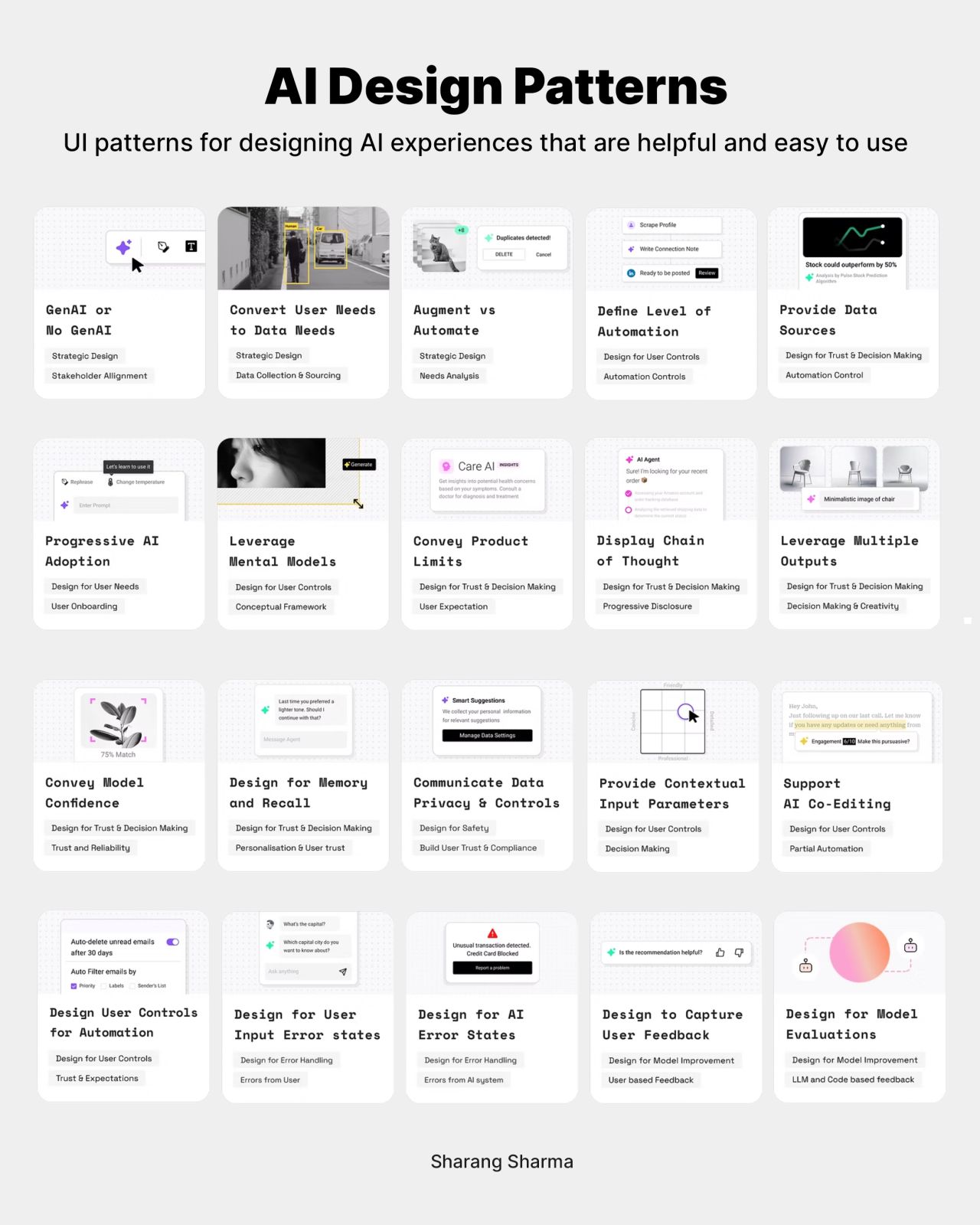
This week we’re talking about Satisfaction, the emotional check-in that happens right after comprehension. On the latest Glare page, we break down how to measure whether your experience leaves users feeling good, using an example from Indiana University’s mobile redesign. We’ve also got a great interview with Karl Weigers on why diagrams beat documents when it comes to defining requirements, and Sharang Sharma shares a strong take on what it really means to design for AI.
If you missed it, our latest webinar shows how UX metrics can cut through the noise and help your team make smarter, faster decisions. Hope you find something in here that pushes your thinking forward! Bryan |
|
|
Satisfaction is the emotional checkpoint that follows comprehension, the first sign that your design met or missed expectations. On the Glare Satisfaction page, we show how to measure whether your experience actually feels good using scores from remote surveys. In this week’s example, Indiana University tested their mobile site redesign before launch by asking: do people walk away feeling good?
The score blends ratings with open feedback to show both what users feel and why. Satisfaction reveals what’s working, keeps your product honest, and drives retention, repeat use, and loyalty. Let us know if you'd like to suggest edits or learn more. |
| |
|
|
We have the full set of interview clips available this week with Karl Weigers. HHe makes a compelling case for treating tradeoffs as a core part of the design process—not something to hide or delay.
Karl shares how vague goals like “reliable” or “intuitive” often go undefined, leading to misaligned teams and rework down the line. He offers simple, practical ways to bring clarity to those early conversations—especially through shared language and lightweight tools.
The idea is that naming tradeoffs early isn’t a blocker, it’s a strategy. It reduces risk, improves decisions, and gives teams a clear picture of what matters before a single line of code is written. Check out the interview clips |
|
|
LINKEDIN POSTS
In this week’s featured post, Sharang Sharma’s calls out that designers must adopt tailored AI UX patterns, not just bolt-on chatbots, to ensure AI features are useful, and contextually appropriate.
Sharang’s framework outlines five essentials: purpose-driven use, user control, transparent AI behavior, task-aligned placement, and robust error handling to build intelligent experiences that users understand and trust. Read more: Design needs new patterns to build AI experiences. | |
|
|
| BRYAN’S LINKEDIN POSTS
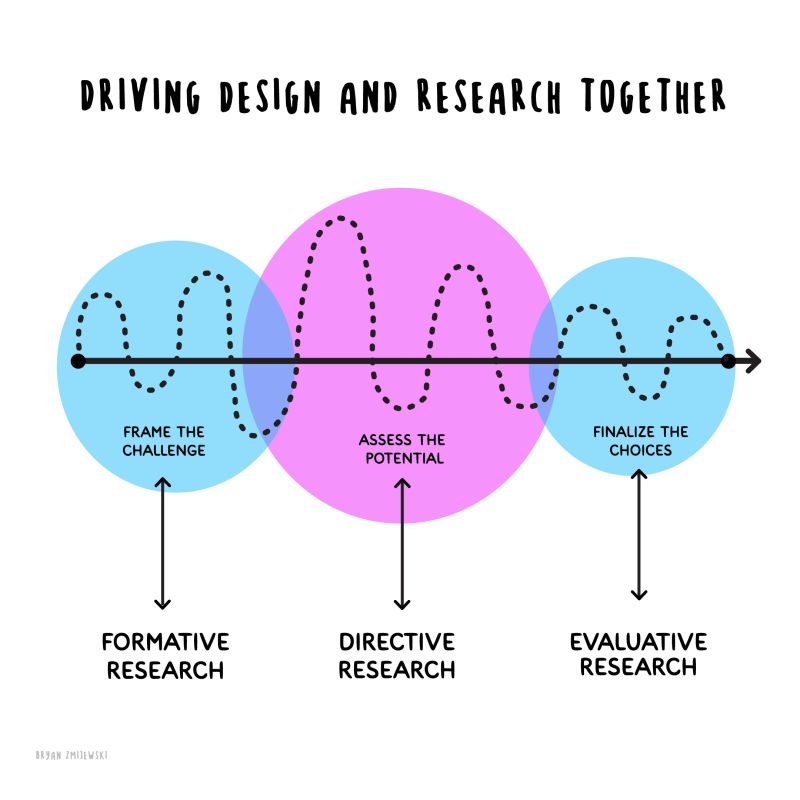
Good design starts with the right research.
Designers must empathize with business challenges to craft user experiences that are both meaningful and feasible.
By using empathy-driven processes and aligning design with business needs, teams can transform barriers into opportunities, building trust and driving impact through shared understanding.
→ Good design starts with the right research |
|
|
|
Watch our latest webinar, 'A Sharper Way To Show Your Design Works,' which is available on LinkedIn for the full replay. In this live session, Bryan showcases how UX metrics cut through opinions and help teams see where designs succeed or fall short... based on user behavior, not guesses!
→ Watch Bryan present now |
|
|
GLARE FORUM
Bryan opens up conversation around how to quickly get started with abbreviated metrics to address Jakob Nielsen’s usability rules.
The two sides of Design Impact opened up discussion about how the design team and organization must work hand in hand to elevate the effectiveness and measurement of design implementation.
Eric weighs in on how attitudinal metrics offer insights into longer term brand and business goals. Iterative Alignment Theory and AI Product Design follow-up posts were added by Bryan to the conversation with Menno Cramer. |
|
|
GLARE RELEASE NOTES
💎 Glare Wiki Improvements, AI Metrics Update, Forum Enhancements & More in v0.9.9.4! Glare v0.9.9.4 is live with exciting updates across the platform: Wiki Improvements: Profile Page Avatars: Upload your own avatar images directly to your profile page using the asset manager! Thumbnail Refresh: Replaced generic thumbnails with the actual faces of interviewees on the Wiki. Join the Community Status Page: Users who submit applications via the " Join the Community page can now track the status of their submissions. Satisfaction UX Metric: Updated our Satisfaction UX Metric. Check out the v0.9.9.4 Release Notes for a complete list of changes! | |
|
|