HELIO GLARE, DESIGN UNDER PRESSURE #77
|
|
|
|
New week, new vibes!
Teams are leaning in and creating more but the harder challenge is making sense of it all. Long explanations, polished screens, and fast output only go so far if nobody can clearly see what is happening or why decisions are being made. This week’s breakdown explore how visual frameworks create alignment, why AI changes the way products evolve, and how design is moving beyond artifacts into systems thinking, feedback loops, and outcomes.
Check em' out!
Bryan |
|
|
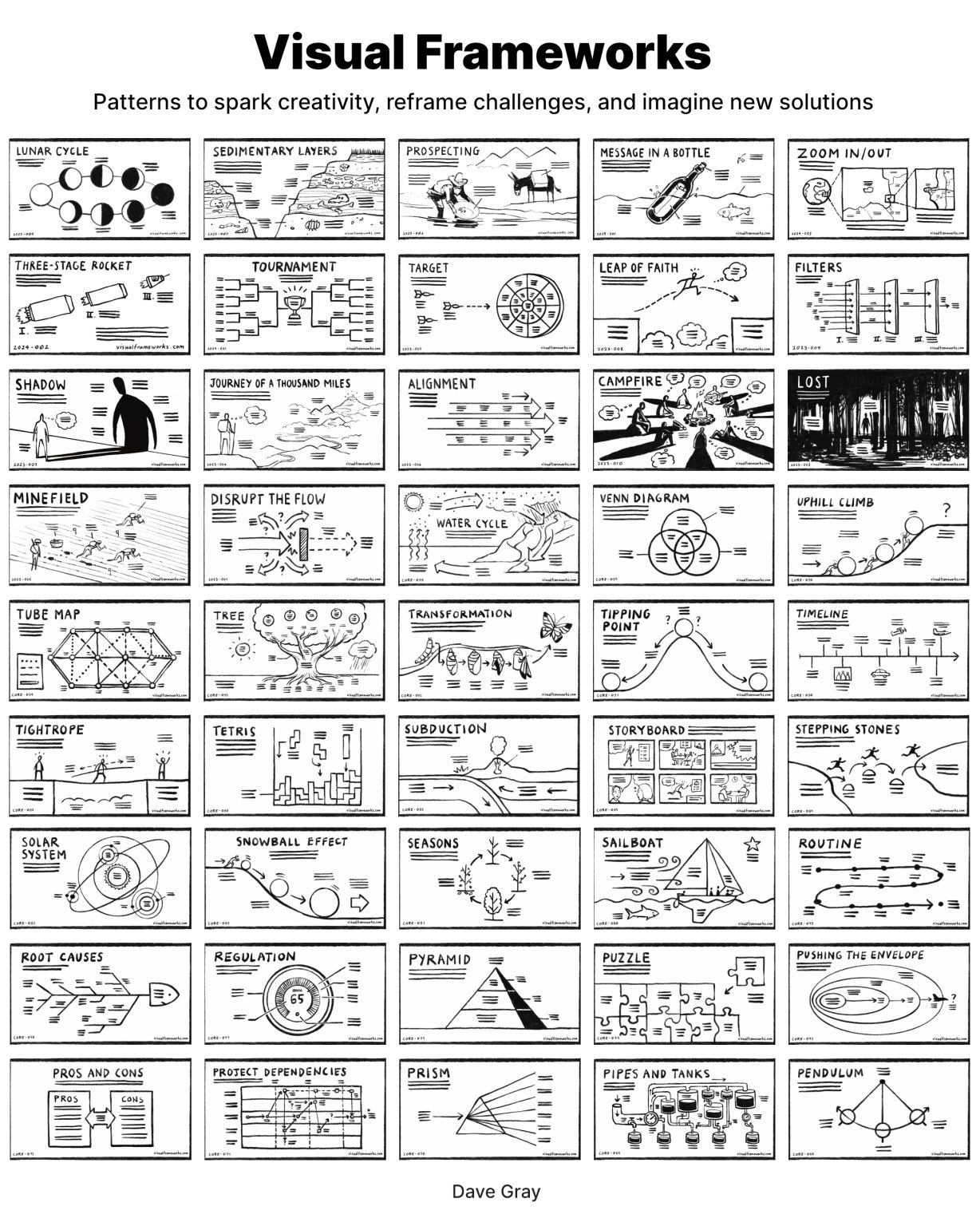
Dave Gray highlights how visual frameworks help teams simplify messy ideas into patterns people can actually work with. The value is not in making things polished. It’s in making them visible enough for people to react, contribute, and build shared understanding together. Small sketches often create faster alignment than long explanations because they give teams something concrete to point at and shape.
DEEP CUT: Visual frameworks help externalize thinking so confusion becomes easier to spot early. Once people can see the pattern together, conversations usually get shorter, clearer, and more productive. |
|
|
|
AI changes design because the system does not always behave the same way twice. In Bryan’s conversation with Sean Savage, Sean explains that teams are no longer designing fixed products. They are designing systems that shift, improvise, and evolve over time.
DEEP CUT: Teams now need better feedback loops to catch problems early, understand what is actually working, and adapt as AI behavior changes. |
|
|
|
In the forum, the ZURB team dives into how design is shifting away from creating static artifacts and toward shaping systems, decisions, and outcomes. It’s a transition similar to early computing. What once felt cutting-edge eventually becomes foundational, and the role evolves alongside the tools.
DEEP CUT: The new value lies in helping teams reduce uncertainty, interpret signals, align around decisions, and navigate complex human behavior across both people and AI agents. |
|
|
|
If you’re exploring AI skills and trying to figure out where they actually fit into your workflow, reply back.
We’d love to share what we’re learning and point you toward a few skills that are already helping teams move faster with less friction.
|
|
|
|
|