HELIO GLARE, DESIGN UNDER PRESSURE #43
|
|
|
Happy Tuesday folks!
Been in the trenches this week, and it’s been a good reminder that a lot of the “traditional” workflows still matter. Things like setting clear design rules, managing UX debt, and doing solid interface work by actually testing what we ship. As AI starts to disrupt how we work, those fundamentals matter more, not less.
Before we reach for new tools or lean on AI, there’s a more basic question worth asking: are we designing for people, or for the systems shaping them? That question came up in the forum and led to a great conversation with Nikhil Mahen about design, systems thinking, and where AI fits into both.
Let’s get to the heart of these pressure points. Bryan |
|
|
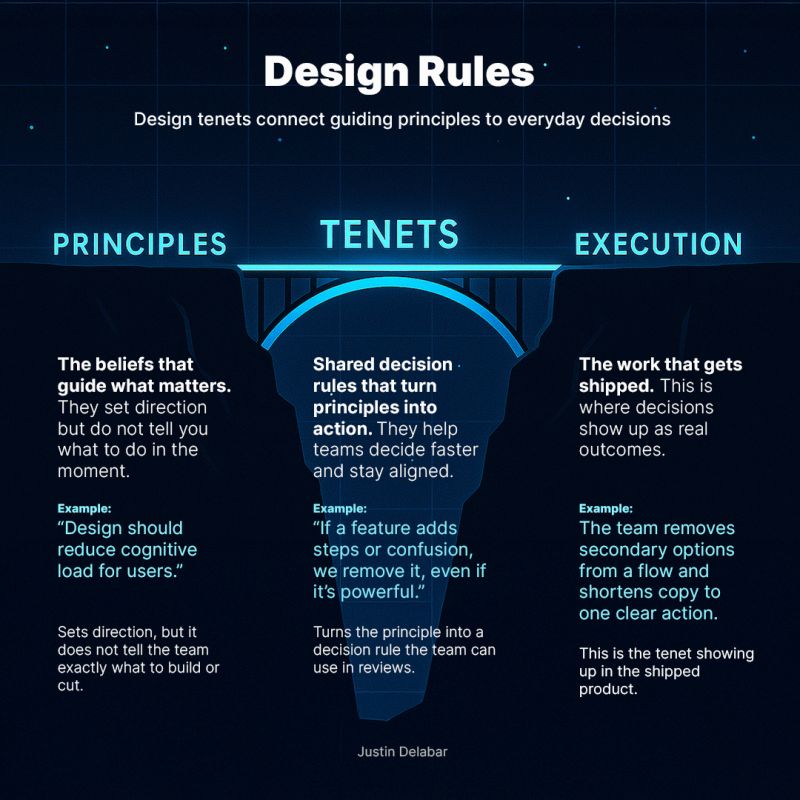
Justin Delabar points out that every design team already works by rules, they’re just usually unspoken. Those invisible rules shape what gets approved, how long debates last, and how confident designers feel acting without permission. When teams write those rules down clearly and sometimes controversially, quality improves and velocity follows.
DEEP CUT: Process avoids decisions, rules force tradeoffs, and without clear edges teams stall while creativity gets stuck relitigating the same choices. |
|
|
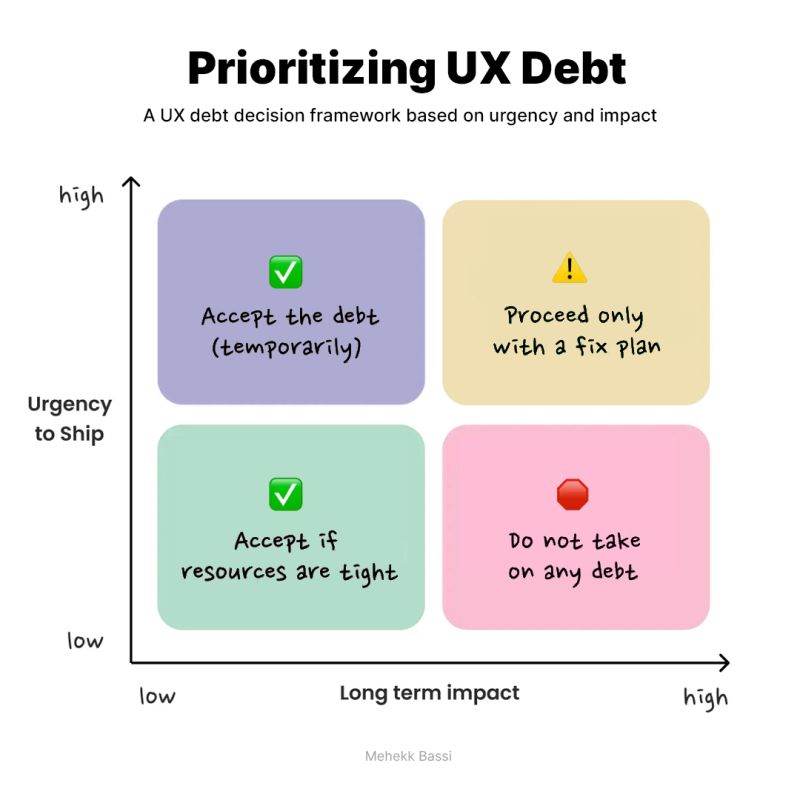
Mehekk Bassi talks about UX the way finance teams talk about money. Debt is something you borrow. Investment compounds over time. Things break down when teams move quickly without being clear about the tradeoffs they’re making or the future cost they’re taking on.
DEEP CUT: UX debt isn’t the problem. Forgetting it exists is, because once it’s invisible, it quietly starts making decisions for you.
|
|
|
Across 20 ecommerce concept tests, the ZURB team noticed a familiar pattern. Nothing was broken. People understood the pages and felt good about what they saw. But when it was time to choose, they hesitated. Choice overload, fuzzy next steps, and assumptions we hadn’t tested slowed things down.
DEEP CUT: Most dashboards show what works, not when people are ready. Hesitation hides behind engagement and polish until confidence is measured alongside completion. |
|
|
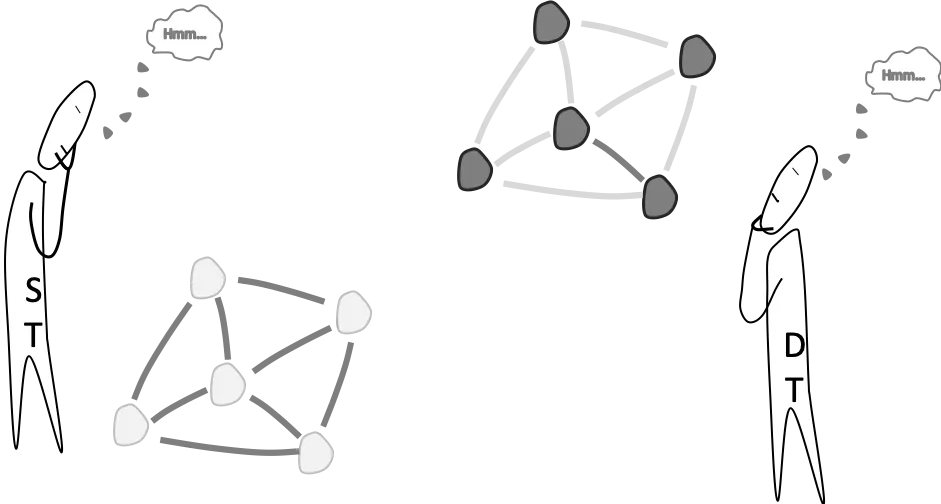
Nikhil Mahen clarifies the difference by framing it as a shift in perspective. Design thinking zooms in on people to understand needs, behaviors, and motivations, while systems thinking zooms out to see how the broader ecosystem interacts, where value flows, and how feedback loops shape stability or drift.
DEEP CUT: Design thinking shapes individual experiences, systems thinking manages complexity, and the skill is knowing when to zoom in or step back as AI accelerates everything. |
|
|
Quick gut check.. Where does friction show up most for you right now?
Reply with the letter and we’ll send you a coffee on us. A) Decisions take longer than they should
B) Speed creates mess we keep stepping around
C) Metrics look fine but momentum feels off
D) Teams keep revisiting the same calls
E) Users hesitate even though nothing is broken |
|
|
|