HELIO GLARE, DESIGN UNDER PRESSURE #41
|
|
|
It'ssss...Tuesday! Another great day to dive into our struggles, no? 😬
If things are moving faster but feeling less certain, you’re not imagining it. Speed from AI is flattening context. “Value” is getting harder to pinpoint, and influence seems to depend more on momentum than evidence. Today's points explore what happens in that gap and what actually helps close it.
Right now, we’re hosting a Q&A with Jake Johnson. It's a great opportunity to ask, is our product innovation grounded in insight? (forum login required). Each day at 8AM PT we host a new Q&A.
So, let's jump in, shall we?
Bryan |
|
|
In his piece on systems thinking and AI, Kike Peña explores a tension many teams are feeling right now. AI makes it possible to move from idea to output in minutes, but speed alone doesn’t guarantee good design. Without understanding how user needs, business goals, and constraints connect, fast work can quietly strip meaning out of decisions.
DEEP CUT: Speed doesn’t replace thinking. It amplifies whatever thinking is already there. Systems thinking isn’t actually slowing teams down but its what keeps momentum from turning into rework. |
|
|
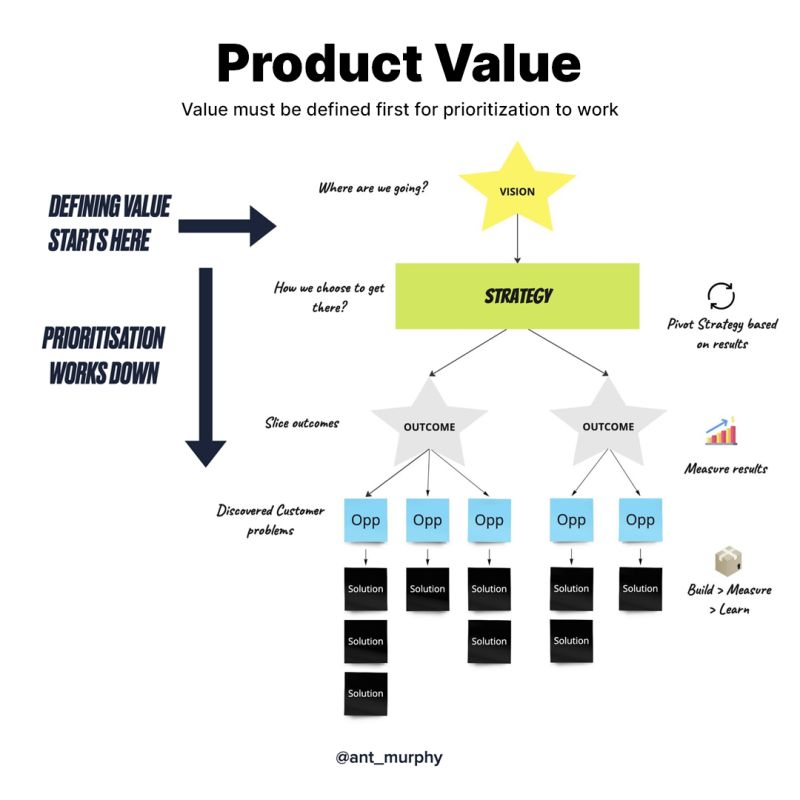
Ant Murphy breaks down why prioritization feels so hard when “value” isn’t clearly defined. He frames prioritization as layered work, starting with vision and strategy, then outcomes, opportunities, and finally solutions. When those layers aren’t explicit, teams end up debating features instead of making decisions.
DEEP CUT: Most prioritization fights aren’t about effort. They’re about missing context. When leaders can’t point to what value means right now, teams default to loud opinions and easy wins.
|
|
|
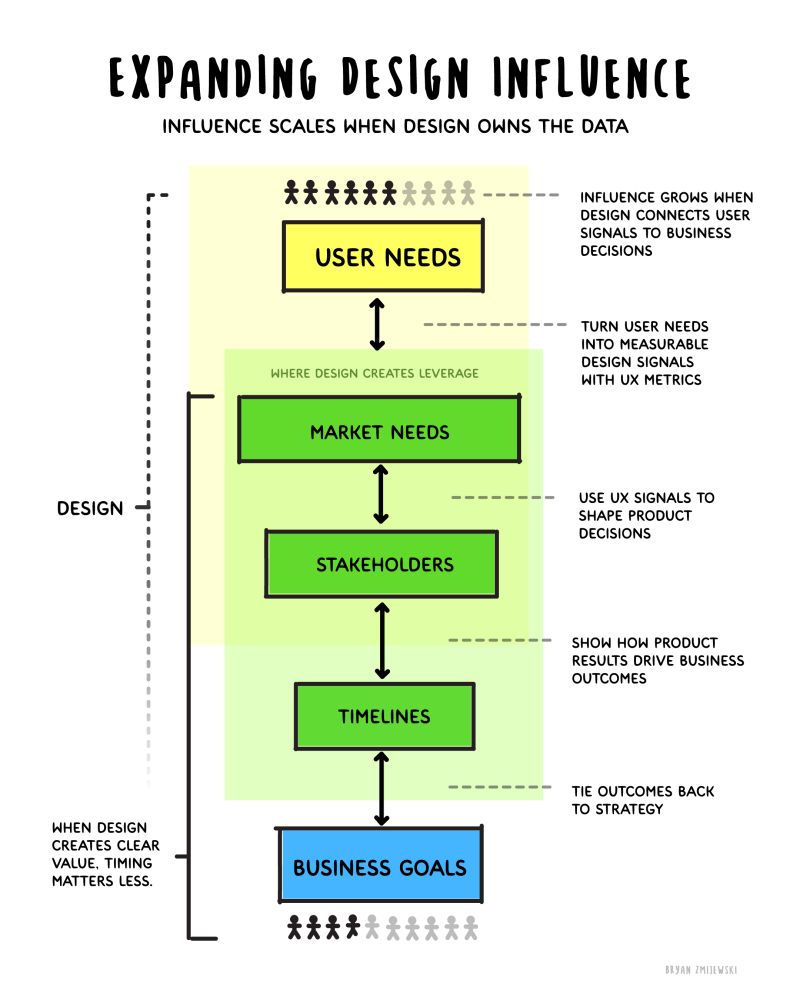
Building on ideas shared by Marina Krutchinsky, Bryan opens up the idea that design pushback often fails because it arrives after decisions have already taken shape. As AI speeds up prototyping and decision cycles, momentum forms earlier and hardens faster. Waiting for the “right moment” to influence is becoming a losing game.
DEEP CUT: Timing doesn’t scale. Ownership does. When design brings its own data into the room, influence no longer depends on being early or persuasive. |
|
|
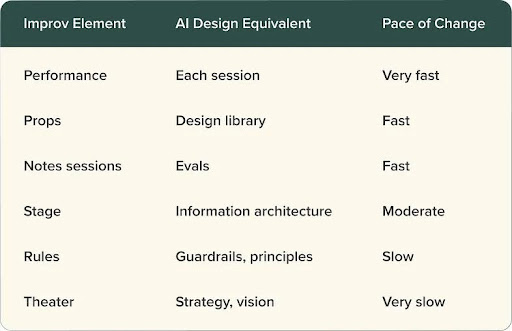
Sean Savage calls out that that AI design is no longer about defining screens and flows, but guiding behavior over time. He uses improv theater as the core metaphor.. unlike traditional software, which is scripted like a play, AI adapts and responds in real-time. Designers must shift from being playwrights to stage managers, shaping the environment and setting boundaries rather than controlling every outcome.
DEEP CUT: Treating AI like deterministic software is risky. The new job of design is control without micromanagement. |
| |
We built a quick game called Signal Blitz mostly with AI. (One of our most recent experiments) Can you get the top score?
Not to brag, but our team’s been sitting at the top of the leaderboard. If you can outrank us, coffee’s on us. |
|
|
|

%20_01KFCJ88JZXR6KGRNV326NVVQE.jpeg)