HELIO GLARE, DESIGN UNDER PRESSURE #38
|
|
|
Happy Friday! In this issue, we're discussing where design value actually comes from when speed is no longer the constraint. As teams push for output, the real pressure shows up in judgment: what to prioritize, what to trade off, and what someone is willing to stand behind when the outcome is not obvious.
I'm also kicking off a short Q&A on a question with Mike Schindler many teams are quietly avoiding: if AI is doing more of the execution, who owns the decisions and the consequences? (forum access required)
From optimizing everything to eroding brand value, today’s pressure points all circle the same idea. Design does not win by moving faster. It wins by choosing better.
Bryan
|
|
|
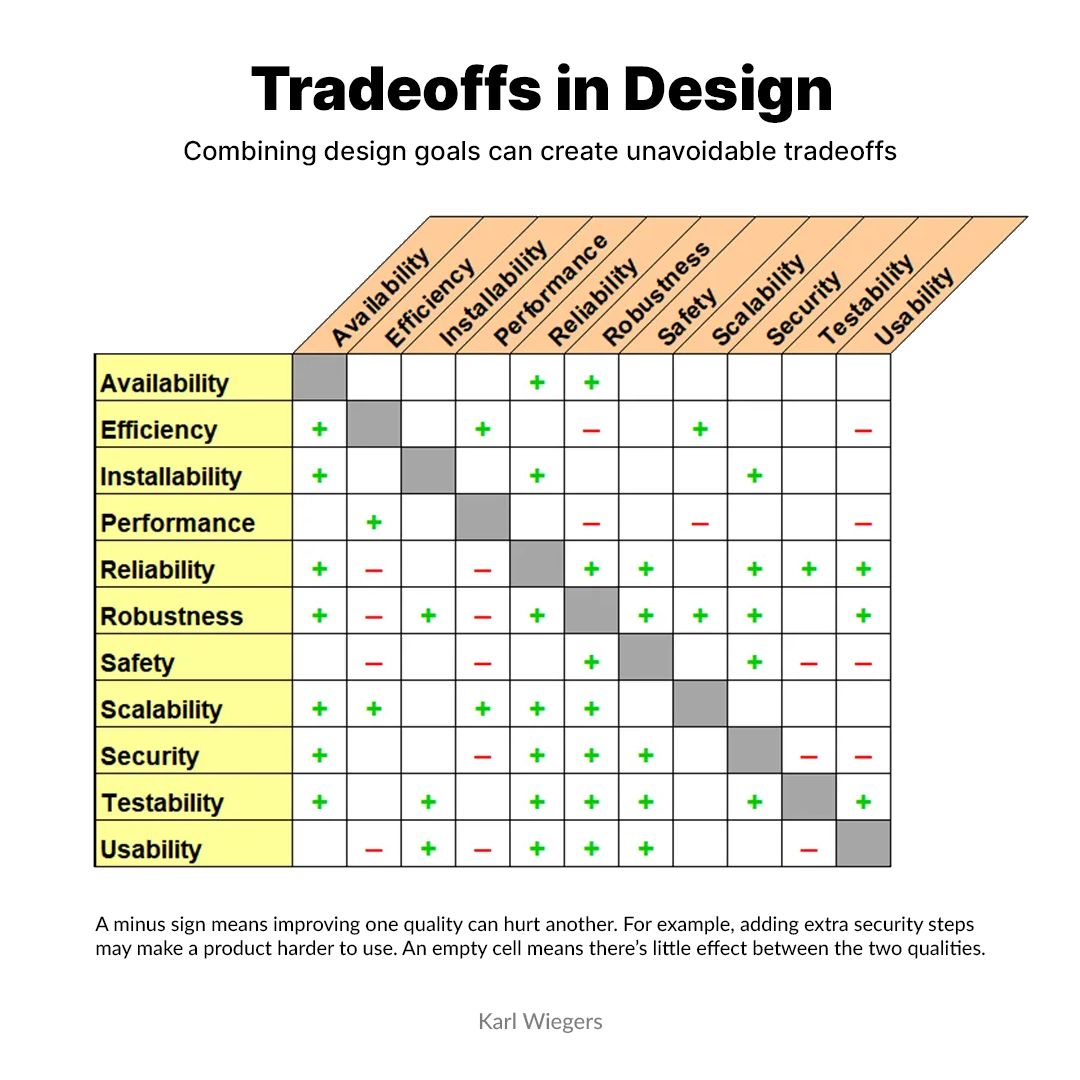
Karl Wiegers reminds us that design is never about perfection. Every improvement comes with a cost somewhere else. The real work is deciding which qualities matter most to users and the business, then making intentional tradeoffs.
DEEP CUT: When usability, performance, and security are all treated as equal, decisions quietly default to whatever ships fastest. |
|
|
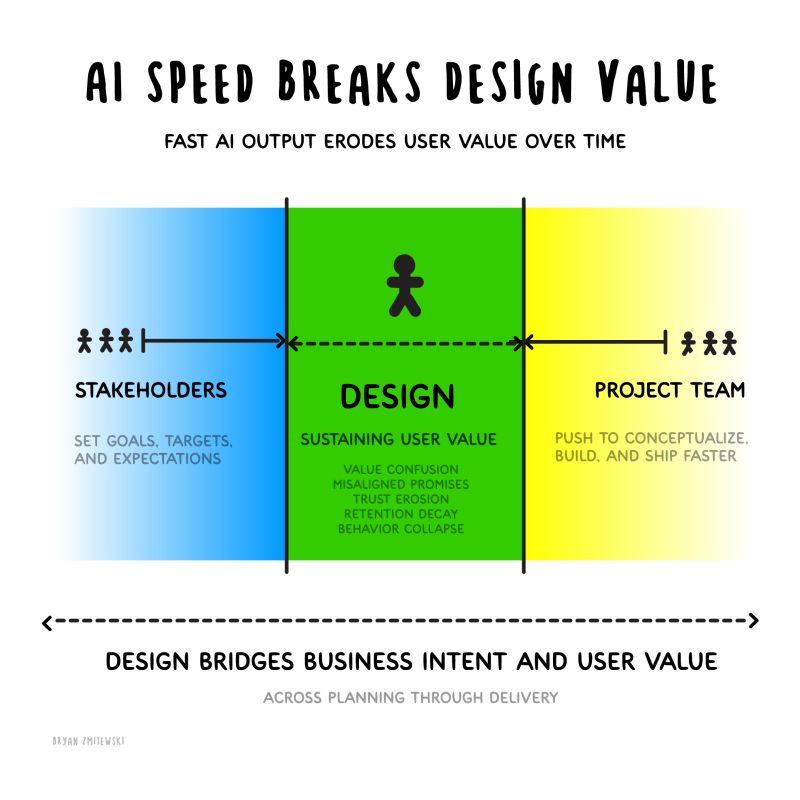
As AI makes output cheap, spot when fast solutions optimize the wrong metric, hide long-term risk, or quietly erode trust. Shipping matters, but only if you know what “better” actually means.
DEEP CUT: Designers gain influence when they connect intent to evaluation and can say, with confidence, this output moved fast but the outcome moved backward. |
|
|
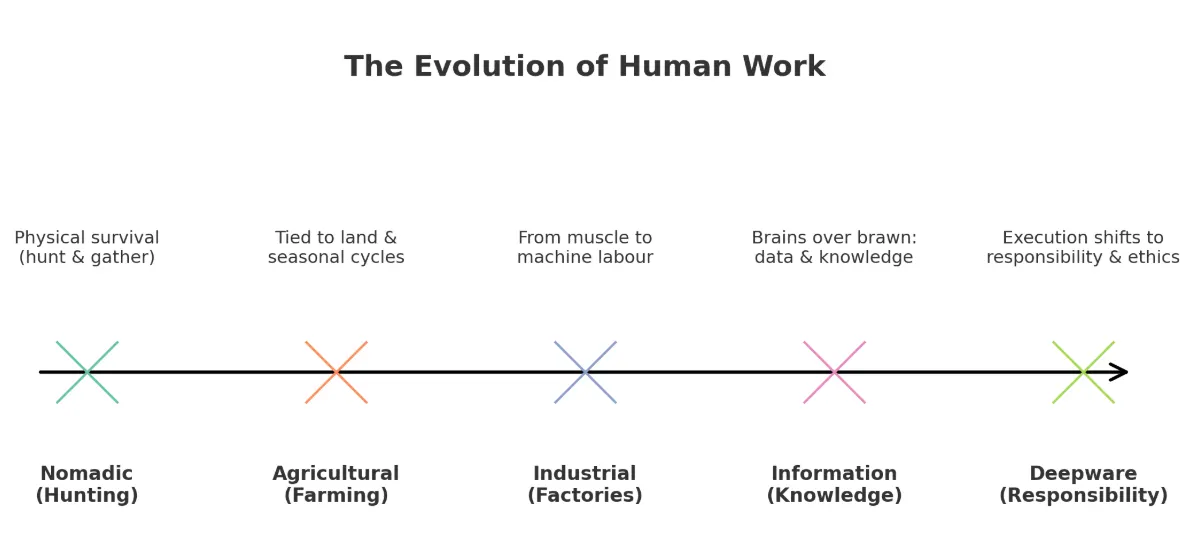
Technology doesn’t erase work, it reshapes it. Patrizia Bertini has beautifully called out that jobs are bundles of tasks, and AI is excellent at execution. What it cannot do is take responsibility when outputs hit the real world.
DEEP CUT: Most organizations are mistaking output for impact. The real risk isn’t replacement. Its leaders quietly let accountability slip through the cracks. |
|
|
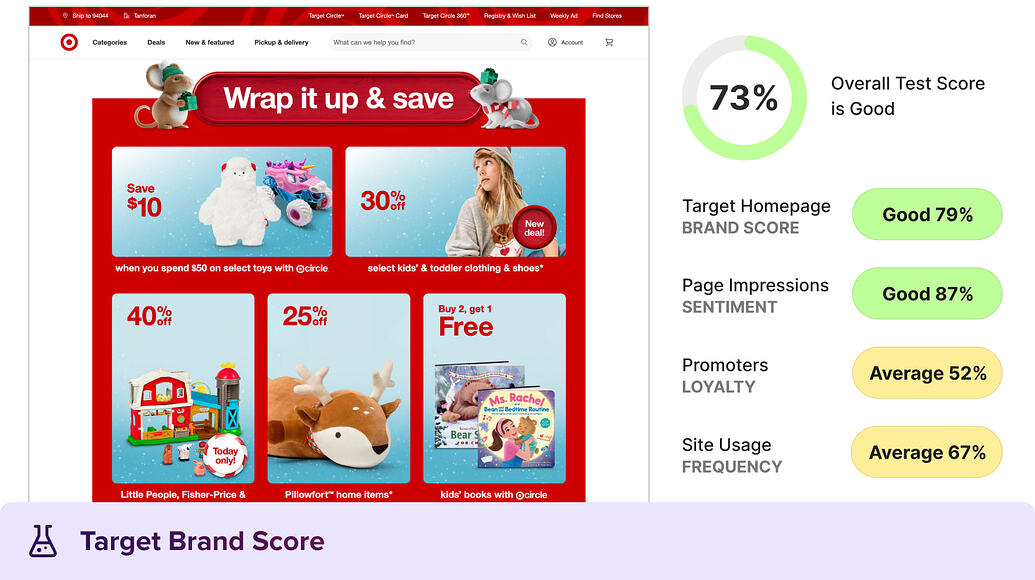
Last month, you told us you wanted us to dig into Brand Value next, one of the hardest parts of a product experience to truly measure. When we tested Target’s homepage, the design looked polished and clear, but emotional connection and trust lagged, showing how easy it is for a strong brand to make sense without actually earning advocacy.
DEEP CUT: Most brands optimize for being seen and skip the harder question of whether being seen actually changes behavior. |
|
|
Be honest. Did you skim or actually read this? If one of today’s signals stuck with you, hit reply.
Respond with your favorite gif, first response gets a coffee on us. |
|
|
|