HELIO GLARE, DESIGN UNDER PRESSURE #33
|
|
|
This week’s articles all surfaced the same quiet tension. Teams are doing the work, tracking the numbers, and shipping fast, but impact still feels hard to prove because meaning, metrics, and consequences aren’t being looked at together.
When teams reconnect with what users feel, do, and rely on, decisions get easier, and debates lose their grip.
Here are today’s pressure points.
Bryan |
|
|
Teams are moving beyond “does it work?” toward shared clarity about what actually matters to users, and that shift is turning metrics from reports into decisions. | |
|
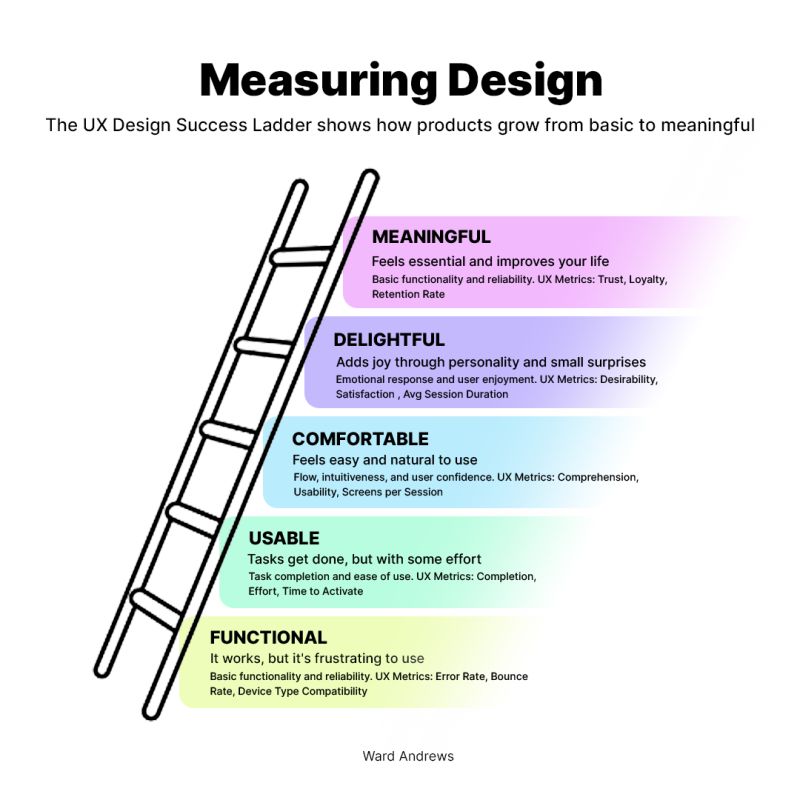
Ward Andrews reframes UX maturity as a ladder, not a checklist. Products move from merely working, to being usable, to feeling comfortable, delightful, and finally meaningful. The higher teams climb, the more the product stops being a tool and starts becoming something people rely on.
DEEP CUT: Most teams think they’re stuck on usability, but they’re actually stuck on comfort. Things “work,” but no one would miss them if they disappeared. Meaning shows up when users change behavior without being nudged. |
|
|
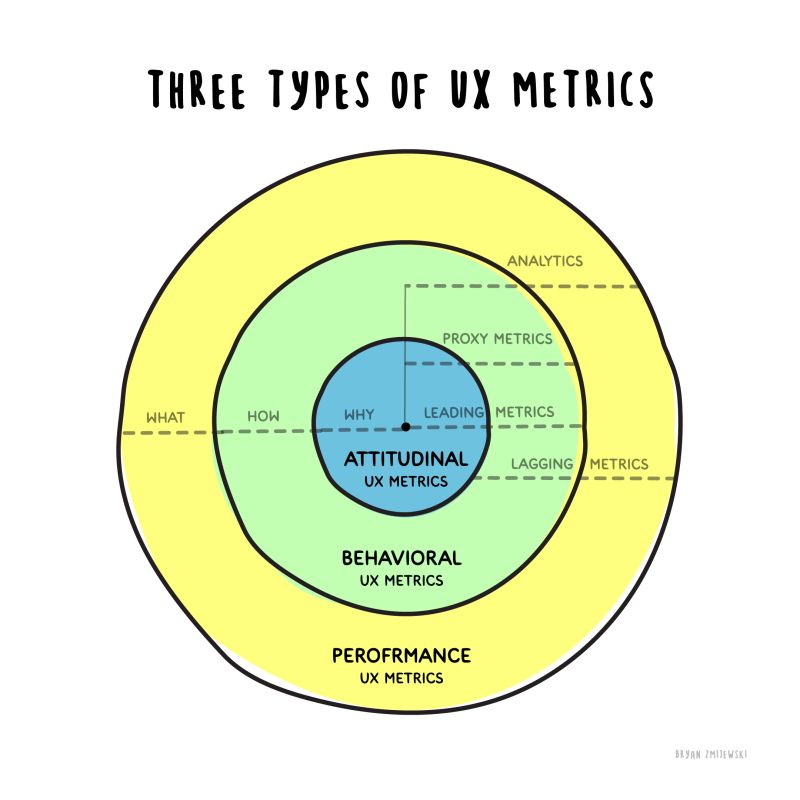
This piece speaks to every design or product lead who’s watched a good idea die in a meeting. Bryan Zmijewski outlines that the attitudinal, behavioral, and performance model connects what users feel, do, and accomplish so teams can stop guessing and start deciding earlier.
DEEP CUT: Most teams wait too long to measure because they think metrics are for validation, not direction. That’s backward. Early signals don’t need to be perfect, they just need to be shared. |
|
|
Martin Tomitsch and Steve Baty challenge the idea that UX stops at the interface. Through systems mapping, they show how design decisions create ripple effects across people, infrastructure, policy, and even the planet. Their UX Butterfly Effect lens helps teams surface unintended consequences before they turn into real harm, especially in fast-moving environments shaped by AI.
DEEP CUT: Mapping systems doesn’t slow teams down, it prevents blind spots that are expensive to fix later. If you’re not asking what happens next, you’re still designing in isolation. |
|
|
🎁 The Gift You’ll Still Use in January | |
|
Reply for a free ZURB audit before the year wraps. We’ll review one flow and surface the biggest opportunity for improvement.
PS: What’s one moment where users hesitate? I’ll send you a metric to track it. |
| |
|