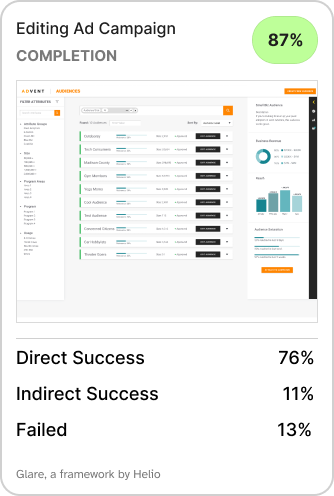
This week we’re focusing on Completion because design only works if people can actually finish what they started. On the Glare page, we show how one team used the Completion metric to test whether users could make it through their new ad targeting flow without getting stuck. The result was fewer blind spots and a faster path to action.
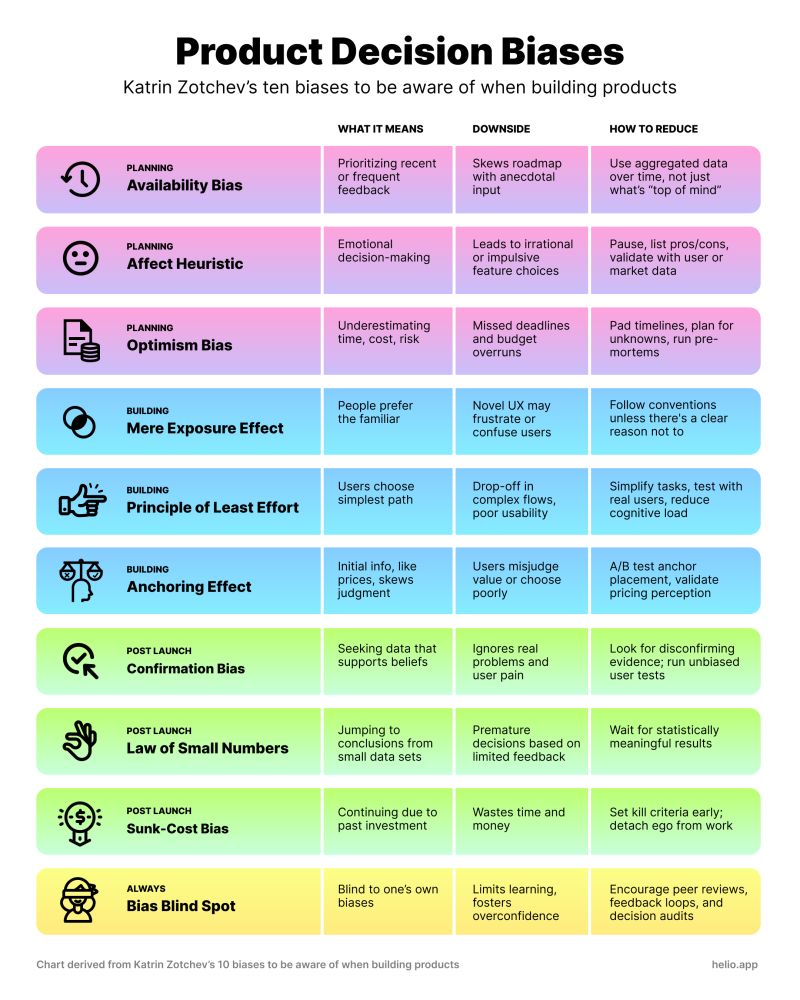
We’ve also released a thoughtful set of interview clips with my interview of Dennis Hambeukers, who explains what design maturity really looks like. His view is that it’s not just about skills, but about helping teams learn, adapt, and grow. In this week’s featured post, we explore how cognitive biases sneak into product decisions and what you can do to stay focused on real user signals.
Hope this week’s content helps you cut through the noise and design with more clarity. Bryan |
|
|
Completion shows you if people can actually get through your design. It’s a simple check: did they finish the flow or get stuck along the way?
On the Glare Completion page, we show how to measure success by tracking whether users complete a prototype directly, get sidetracked along the way, or can’t finish at all. In this week’s example, an ad management team tested their audience targeting page to see if users could successfully make changes to their ad campaigns.
The score breaks down what worked and where users struggled. Completion is a fast way to spot blockers, fix broken flows, and make sure your design helps people get things done. Want to learn more or suggest edits? Let us know in the forum. |
| |
|
|
This week, we’re featuring a set of clips from Dennis Hambeukers. Dennis shows how design maturity isn’t just about craft, it’s about how people grow into roles that drive learning and transformation across an organization.
His model pairs beautifully with Peter Senge’s learning disciplines, showing how design skills like experimentation, collaboration, and systems thinking can shape smarter teams and better outcomes. Watch the clips and start thinking beyond the screen. |
|
|
LINKEDIN POSTS
In this week’s featured Helio post, Katrin Zotchev highlights how cognitive biases quietly influence product decisions at every stage from planning to interpreting user feedback. While we can’t eliminate these biases, we can reduce their impact by relying on structured data, user input, and a healthy dose of critical thinking.
→ Biases distort product decisions. | | |
|
| BRYAN’S LINKEDIN POSTS
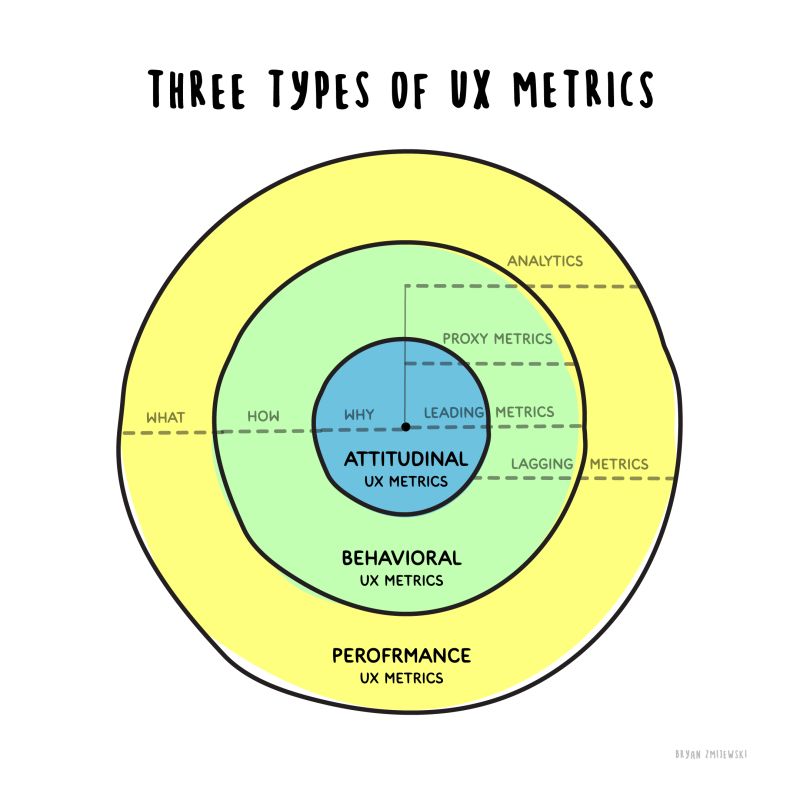
Bryan covers when ideas stall in meetings and gut instinct isn’t enough, UX metrics can give product and design teams the evidence they need to move forward.
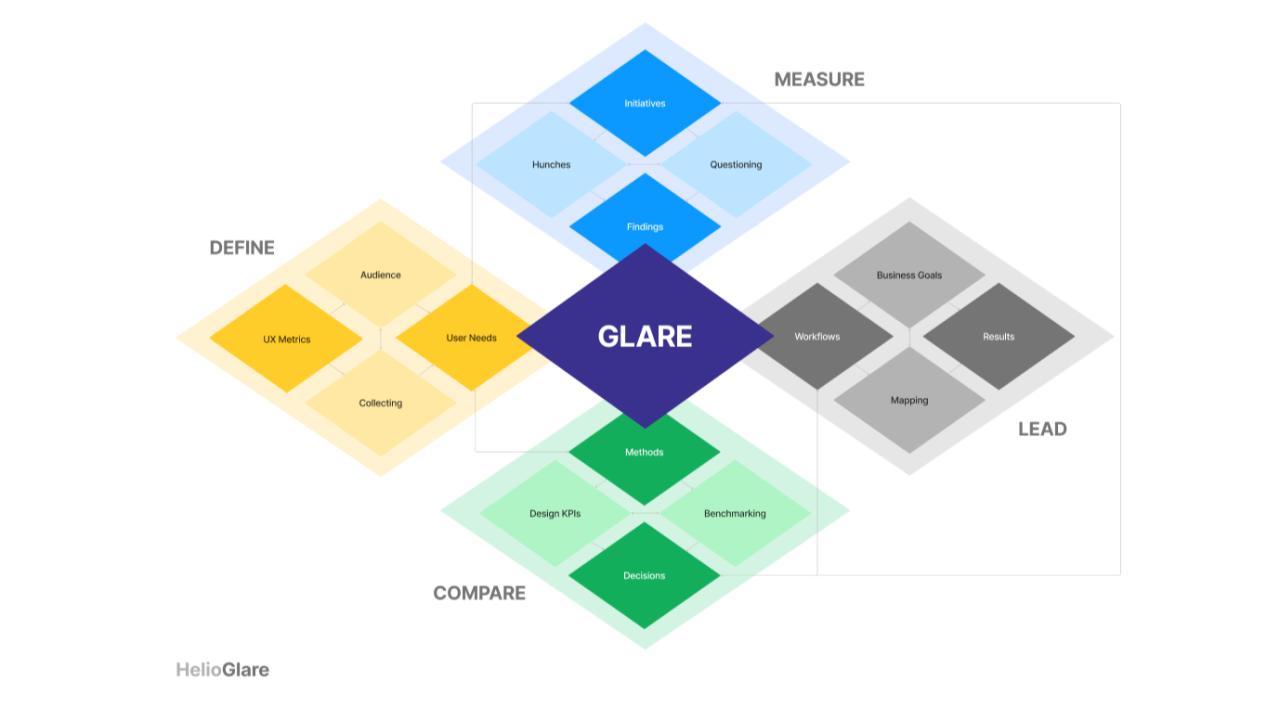
Helio’s Glare framework breaks metrics into three simple types, attitudinal, behavioral, and performance, so teams can test ideas early, measure what matters, and align around real user signals. → If you’ve ever had a great idea die in a meeting, this is for you. |
|
|
| Watch our latest webinar, 'A Sharper Way To Show Your Design Works,' which is available on LinkedIn for the full replay.
In this live session, Bryan showcases how UX metrics cut through opinions and help teams see where designs succeed or fall short... based on user behavior, not guesses! → Watch Bryan present now |
|
|
GLARE RELEASE NOTES
Slower week due to working on content. Here's what we are working on in the next week:
| - We're looking to fix up how the content loads in on posts.
- We'll fix up how the content loads for our Glaringly Obvious posts.
- Content editor functionality - We're looking to add in a true content review process
|
Got a suggestion? Reply to us with your ideas. |
|
|
|